A Day at the Races: Au revoir to Aqueduct
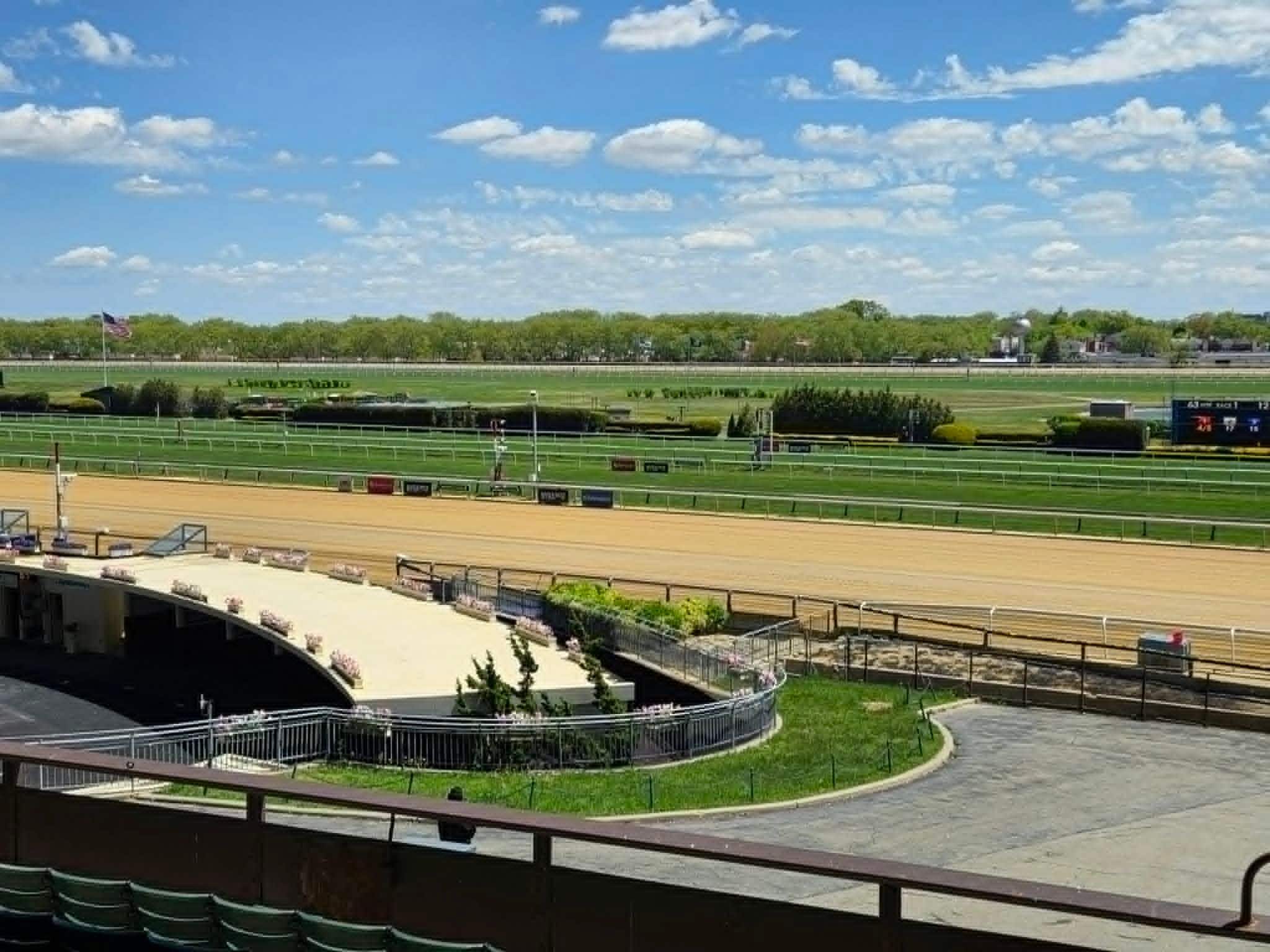
Aqueduct (Vance Hanson photo)

Updated:
As much as any racetrack in America, Aqueduct is steeped in historical significance. In a few weeks, that's all that will be left.
Two years after acknowledging the "long goodbye" to Aqueduct, I bid my adieu earlier this month by spending two days of racing there. The first, a gorgeous, sunny Thursday afternoon, was probably like many in the 1960s, when Aqueduct was the epicenter of American racing, with the crowds and betting handle to prove it.
The second day, a Saturday, was cool, windy, and overcast with occasional showers; in other words, the conditions Aqueduct had become synonymous with in the half-century since it morphed into a dreary studio, largely for wintertime racing.
Aqueduct dates to 1894, but few have recollections of anything other than the current incarnation, which opened in September 1959 after a four-year closure. Re-built at a cost of more than $33 million (over $360 million today), the "Big A" was conceived as a utilitarian gambling hall. The antithesis of sister tracks Belmont Park and Saratoga, it was a Jet Age behemoth designed to pack in as many as 80,000 bodies. In this, it was wildly successful, for a time.
The older versions of Aqueduct, a 1 1/4-mile track through 1939 and then a one-mile oval through 1955, showcased their share of Hall of Fame greats. But in those days, the Queens County Jockey Club had to share racing dates with two or more downstate tracks during a vastly shorter racing season. The frequency at which the crème de la crème of horseflesh made their presence felt at Aqueduct really kicked into overdrive when consolidation occurred under the NYRA umbrella.
Given how American racing has evolved, it's hard for a current follower of the sport to fathom how integral Aqueduct was in its first decade back in service. Including the Belmont dates it absorbed over five seasons, there was typically at least one race of national importance held there every week, eight months a year. Even when a rebuilt Belmont returned to the rotation, Aqueduct still hosted prime races in vital months like May, July, and October.
I could regurgitate a laundry list of turf greats who once made every Saturday (and sometimes weekdays) at the Big A a happening, but I'll instead focus on what remains.
One of the nicer aspects of New York's downstate tracks is their accessibility by public transport. For countless folks over the years, getting to the Big A has involved taking the A train from Manhattan or Brooklyn. It's still convenient and efficient, if a little dawdling.
The hulking edifice of Aqueduct, like that of the recently demolished Pimlico, shows unmistakable signs of rust and decay. With the grandstand area long ago converted into a casino, racing patrons now congregate exclusively in the old clubhouse. Casino goers, though, can step outside for some fresh air and enjoy panoramic views of the track, if they so desire.
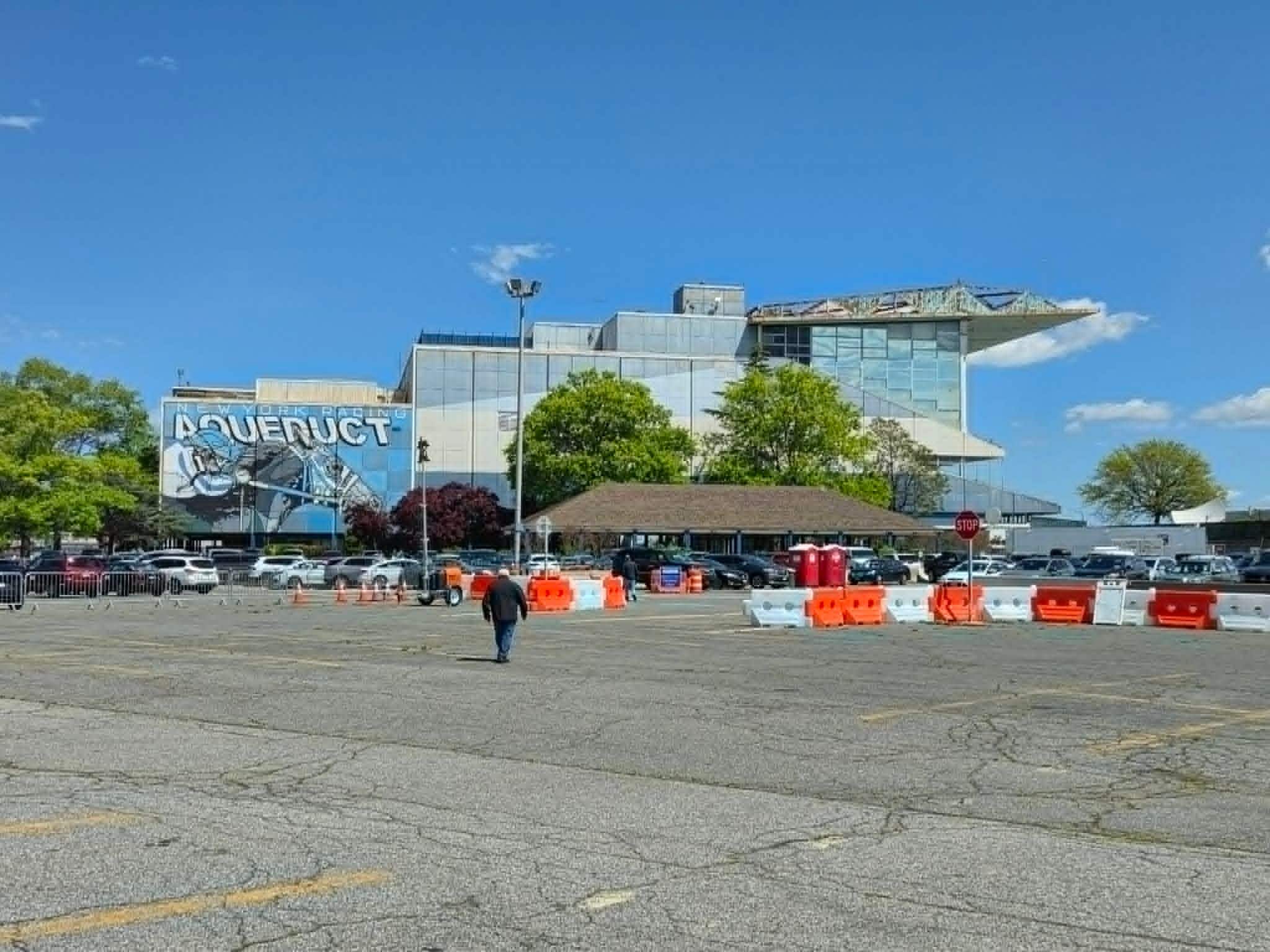
Aqueduct (Vance Hanson photo)
The addition of the casino has not been the only notable change to Aqueduct since my last visit in 2004. More welcome was the re-conversion of the inner dirt track to a turf course. Not only are the three courses and infield themselves aesthetically pleasing, but they are a much truer picture of what the track looked like in its peak years. A guilty pleasure is just scanning and staring at the track, imagining you and 50,000 others witnessing Kelso, Buckpasser, or Dr. Fager going about their business.
The cavernous two floors bettors are largely confined to were naturally sparse on Thursday, less so on Saturday, given the outdoor elements. Televisions and comfortable seating near them are more than plentiful, and the generally weathered clientele and occasional pigeon pay as much attention to the action across the country as to what is happening mere feet from them. Staircases do lead to an upper floor, dark and unused except by the more snappily dressed patrons of the Equestris restaurant.
The historically minded visitor will delight in various framed Peb artwork depicting personalities from Aqueduct's 1960s peak, an up-to-date wall of photos of Wood Memorial (G2) winners, a portrait of Hall of Fame trainer "Sunny Jim" Fitzsimmons, and other artifacts. One wall is devoted to framed photographs of the winners from the second Breeders' Cup, held at Aqueduct in 1985. It's a safe bet that outside papal visits, Aqueduct has not seen a crowd like the 42,000 on hand for that Breeders' Cup in the intervening four decades.
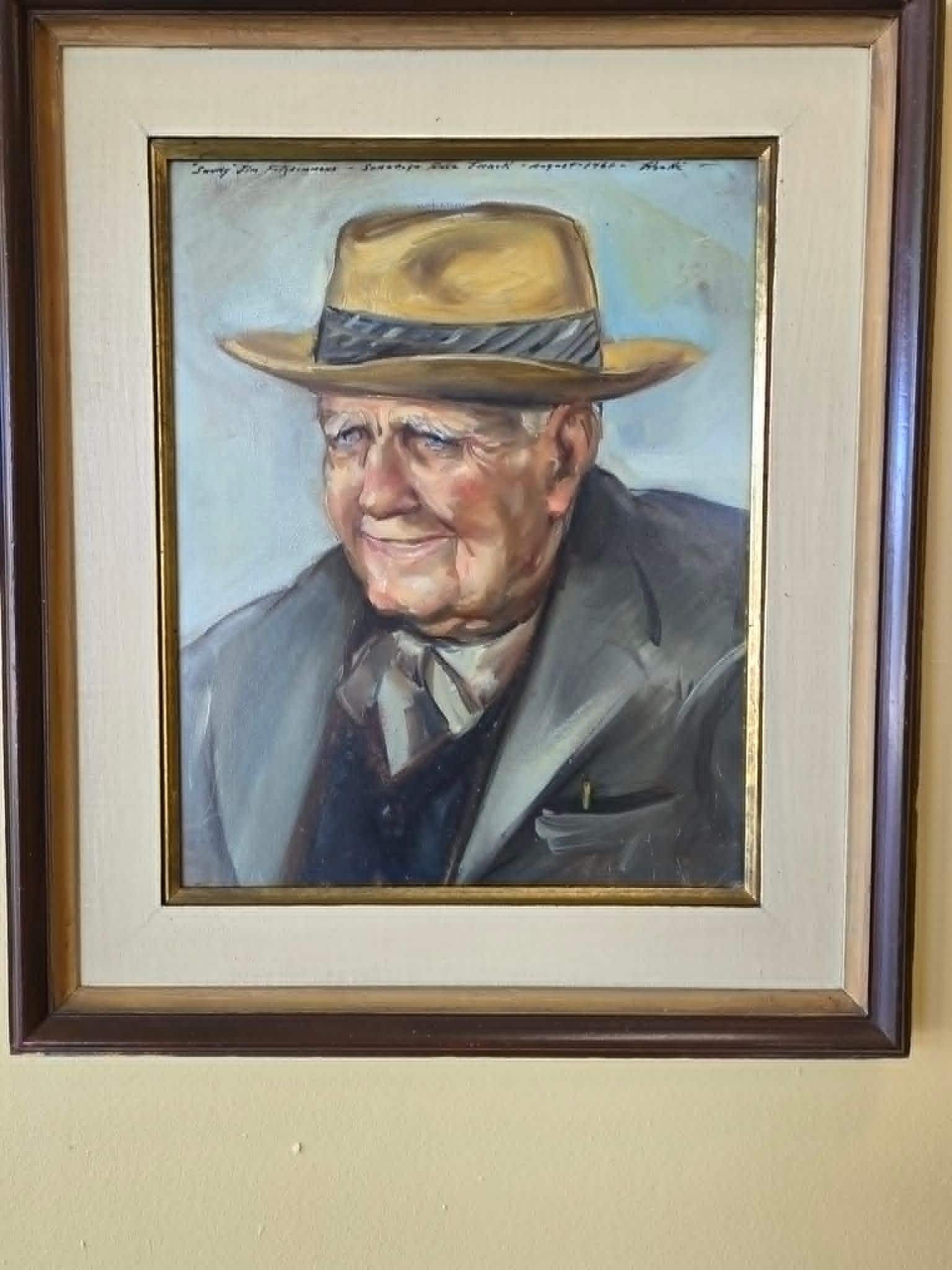
Sunny Jim Fitzsimmons portrait (Vance Hanson photo)
Despite hosting the third classic five times in the 1960s, it is quite evident why Aqueduct was never seriously considered as a host for the Belmont Stakes Racing Festival since 2024. The amenities simply aren't there anymore. The stadium seating and box area, especially, have seen far better days. And Chris Griffin's race calls are virtually inaudible outside, despite a handful of speakers still attached to the building.
Thanks to the time and generosity of Keith McCalmont from the NYRA publicity department, my visit included a trip to the paddock and a real railbird's view of a race, a walk on the roof for a panoramic view of the racetrack as well as the Manhattan skyline behind it, and access to the press box. Getting to sit near where Charles Hatton, David Alexander, and occasionally Red Smith molded typewritten words into art during the Big A’s golden age was special.
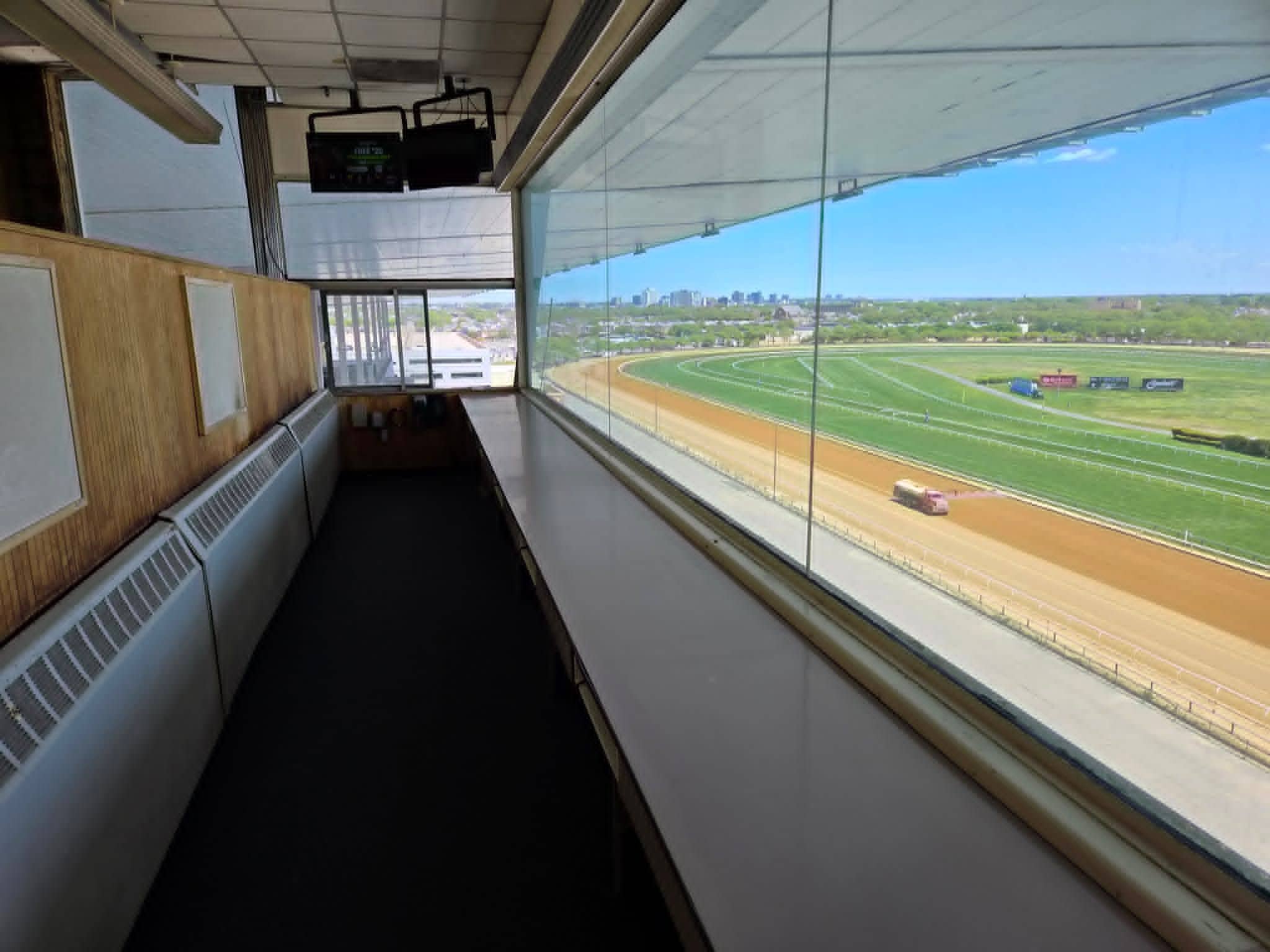
Aqueduct press box (Vance Hanson photo)
As for the actual sport on the track…
Thursday’s allowance feature, on the grass, was of the kind that would have been routine back in the day. Though only a field of five, it included Integration, a multiple graded stakes winner with six Grade 1 placings to his credit. Another entry was the multiple Grade 1 veteran Carson’s Run. Integration won late from Risk Tolerance, a Chad Brown trainee who might yet still be heard from in a black-type race down the road.
Saturday featured four stakes, three of which were the final graded stakes ever to be run at the Big A. Crazy, I know, given Aqueduct remains open until June 28.
The two main ones were the Ruffian (G2) and Peter Pan (G3), both of which held Grade 1 status at times during their respective lives. Ruffian earned half of her 10 career wins at Aqueduct, so it was somewhat fitting that Irish Maxima won her namesake race by making all, though finishing off the job in less-than-Ruffianesque style.
The Peter Pan, named for another Hall of Famer, has sometimes been a reliable stepping stone to the Belmont (G1), though likely not this year. There wasn’t much depth to this Peter Pan, though the winning Growth Equity remains high-ceilinged.
Aqueduct races on Memorial Day, the 61st anniversary of a record 73,435 squeezing into its gates to witness Gun Bow win for the final time, in the Met Mile under 130 pounds. And after a two-week breather, Aqueduct will over three weeks ease toward its finish line.
The Aqueduct of old no longer awaits those looking to make a similar pilgrimage. Just a very old Aqueduct. Despite its handling, it ran the most courageous of races. Its record will long be remembered.
ADVERTISEMENT