Royal Ascot 2026: Australian, Japanese contenders loom large in sprints
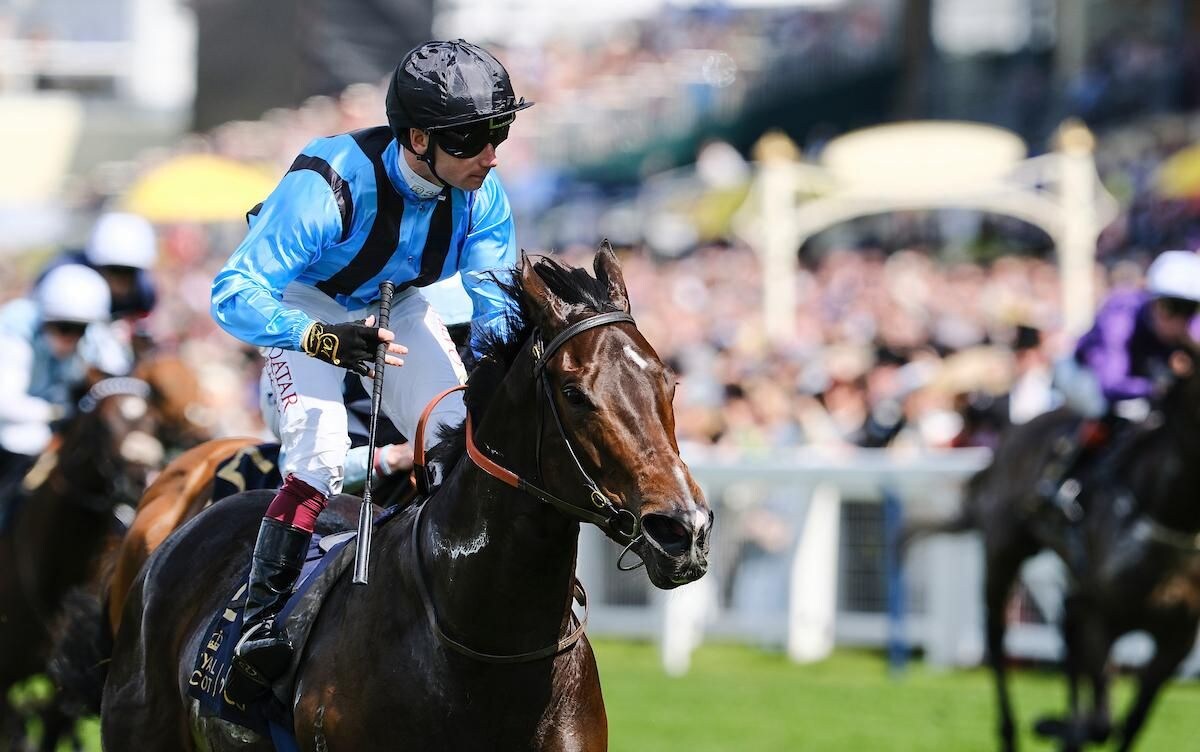
Asfoora became the sixth Australian sprinter to win the King Charles III (Photo by Megan Coggin/Ascot Racecourse)

Updated:
The five challengers at Royal Ascot from Australia and Japan – Overpass, Joliestar, Asfoora, Satono Reve, and Lugal – all have two things in common: speed and class.
It’s a long way to send a horse from these countries to Royal Ascot, especially given that the prizemoney isn’t any better than at home. The purses for the King Charles III (G1) and Queen Elizabeth II Jubilee (G1) are nothing to be sneezed at – $938,000 and $1.34 million, respectively.
But Japan’s leading sprints, the Takamatsunomiya Kinen (G1) and Sprinters S. (G1), are both $1 million races, while in Australia, there are at least five major sprints worth more than $2.1 million, including the $14 million Everest (G1), the richest turf race in the world.
The appeal of Royal Ascot is partly about glamour and tradition, but also about international stud value. All bar Overpass have a future in the breeding barn. It’s also helpful to these runners that the connections of the best sprinter in the world (and arguably the best horse, period), Hong Kong’s Ka Ying Rising, have dismissed Royal Ascot as a target, setting their gelding to local riches and limiting their overseas ambitions to the Everest.
Just to make the world pecking order clear, four of these five – Overpass, Joliestar, Lugal, and Satono Reve – have been soundly beaten by Ka Ying Rising in the past two years, on four occasions in the case of Satono Reve. Indeed, it’s a shame the connections of Hong Kong’s Helios Express, who has been second to Ka Ying Rising eight times in the past two years, didn’t think about heading to Royal Ascot. Maybe next year.
THE PROVEN AUSTRALIAN
Australian success at Royal Ascot has been notable ever since Choisir’s historic sprint double in 2003. It’s reinforced the view that the best turf sprinters in the world are bred in that region – not surprising, given the focus of Aussie breeders on speed, juvenile speed in particular.
No horse highlights the Australian pre-eminence in sprinting better than Asfoora. In her homeland she’s had seven attempts at Group 1 races and failed to win; yet, taken to Europe in the past two years, she’s won three Group 1 races and was named champion European sprinter last year.
Admittedly Asfoora is suited to Europe’s greater emphasis on five-furlong sprints, at which trip she’s won the King Charles III, the Nunthorpe and the Prix de l’Abbaye; Australia has only one five-furlong Group 1 and two at 5 1/2 furlongs, with most of the Australian Group 1 sprints being at six furlongs. Nonetheless, if you put her in a five-furlong Group 1 in her homeland against Overpass and Joliestar, the other two would probably be favored.
Asfoora has not begun her 2026 campaign well, finishing out of the money in two prep races. But unlike the previous two years, she was left in Europe for the winter and moved to the local stable of Lemos De Souza. She has now been reunited with her regular Australian trainer Henry Dwyer, and an improved effort in the King Charles III would not surprise.
TWO HUGE CHANCES FOR AUS-BREDS WITH NZ CONNECTIONS
Overpass and Joliestar are both trained in Sydney and were both bred in Australia. But both horses have extremely strong connections with the other major racing country in the South Pacific, New Zealand.
Pretty much all of Joliestar’s human team comes from New Zealand. Her owners, Brendan and Jo Lindsay, run Cambridge Stud, New Zealand’s leading breeder in the last part of the 20th century when run by Patrick Hogan, who sold the stud to the Lindsays in 2017. Brendan Lindsay previously founded the internationally-successful Sistema Plastics, which he sold in 2016 for NZ$660 million ($385 million at today’s exchange rate) on the strict provision that its U.S. buyer, Newell Brands, continued to manufacture Sistema products in New Zealand for 20 years.
In addition, Joliestar’s trainer Chris Waller is originally from New Zealand, as is her rider James McDonald, a three-time winner of the Longines World’s Best Jockey award. All three New Zealanders behind Joliestar have won at Royal Ascot previously – Nature Strip won the King’s Stand (now the King Charles III) in 2022 for Waller and McDonald (who’s also won other races at the Royal meet), while the Lindsays won the 2020 Diamond Jubilee (now the Queen Elizabeth II Jubilee) with the UK-trained Hello Youmzain.
Overpass’s connections are more Australian – his jockey Josh Parr and his ownership team are Australian – but his trainer is another expat New Zealander in Bjorn Baker. He began his training career in partnership with his highly successful father Murray Baker, who from his New Zealand base raided Australian racing frequently and won the Australian Derby (G1) five times. Bjorn emulated his father by winning the Australian Derby this year with Green Spaces.
Both horses have made their names as sprinters, but they are slightly different types, which shows in the races they are targeting.
First to appear is Overpass, who is out to emulate Nature Strip in what is now the King Charles III over five furlongs. If there were four-furlong races in Australia, he’d be outstanding, such is his gate speed; he’s raced over six furlongs most of his career rather than five, but his speed suggests he should enjoy the shorter trip.
If you looked at his race record you’d think he was an Ascot specialist, having won four of his seven races at Ascot. However, these have all been at the “other” Ascot, in Perth, Western Australia; his victories there include two in the Winterbottom (G1) and two in The Quokka, a slot race similar to the Everest worth A$3.52 million. Significantly, the beaten brigade in his first Quokka included Asfoora.
Overpass has also been entered in the Queen Elizabeth II Jubilee over six furlongs on the final day. If he starts, he’s likely to lock horns again with Joliestar, the current favorite in UK betting markets, who is being saved for the Saturday race.
Joliestar had enough stamina to win the Australian 1000 Guineas (G1) over about a mile as a three-year-old, but since then she’s mostly stuck to sprinting. Her bankroll of $6.01 million isn’t as good as Overpass’s $8.99 million, but the latter’s figures were inflated by his two Quokka victories, and the mare leads him 5-to-2 in Group 1 victories – the latest in Sydney’s premier autumn sprint, the TJ Smith S.
If you asked Australians, they would rate Joliestar the better horse, something reflected in ratings. But there’s not much in it, and Overpass has beaten the mare home on occasions – significantly in the 2025 TJ Smith, where he was second and Joliestar ninth behind Briasa, and the 2025 Everest, where they finished fourth and fifth behind Ka Ying Rising.
The form book suggests that Joliestar would be the better prospect if it rains, whereas the advantage is not so great on good footing. Regardless, both are likely to be strong winning chances in their preferred contests.
JAPANESE SEEK FIRST ROYAL ASCOT VICTORY
Japanese horses have become a force around the world. But to date, victory at Royal Ascot has been beyond them. They seek to right that record in the Queen Elizabeth II Jubilee with two internationally-proven sprinters, Satono Reve and Lugal.
Joliestar’s owner Brendan Lindsay may be very wealthy after the sale of Sistema, but he’s not in the same league as Satono Reve’s billionaire owner Hajime Satomi. He is the chairman of Sega Sammy Holdings and founded Sammy, which became hugely successful by selling the Japanese gaming machines known as pachinko and pachislot.
The “Sega” of Sega Sammy is the successful video gaming company, which he bought in 2004, and he was one of the key figures in turning Sega’s iconic Sonic the Hedgehog game into a hit movie franchise starring Jim Carrey.
Most of Satomi’s horses have the “Satono” prefix, the most notable including Satono Diamond, Satono Crown, and Satono Aladdin.
Satono Reve has proven to be one of the best Japanese sprinters since his sire Lord Kanaloa strode the world stage in the early 2010s. He’s twice won the Takamatsunomiya Kinen and was just a half-length from beating Lazzat in the Queen Elizabeth II Jubilee last year. His record would be even better but for running into Ka Ying Rising four times, finishing second twice and third once.
Satono Reve’s trainer Noriyuki Hori is one of Japan’s most successful horsemen, best known internationally as the trainer of multiple Hong Kong Group 1 winner Maurice and Dubai Sheema Classic (G1) runner-up Duramente. He will be ridden by globetrotting Brazilian jockey Joao Moreira.
Lugal doesn’t have quite the record of Satono Reve, but he did win the Sprinters S. in 2024 and this year beat all but Native Approach in the Al Quoz Sprint (G1) on Dubai World Cup night. Behind Lugal that night, in third and fourth, were Satono Reve’s nemesis Lazzat and last week’s Jaipur (G1) winner Reef Runner.
Lugal is owned by Yoshimasa Ema and trained by Haruki Sugiyama, trainer of Lovcen, winner of the first two legs of the Japanese Triple Crown this year.
By reputation and prior Royal Ascot history, Satono Reve and Lugal have a job ahead to beat Joliestar, let alone the European sprinters. But on ratings there isn’t that much between all three. They shouldn’t be forgotten.