Royal Ascot 2026: What I learned from my three days of selections
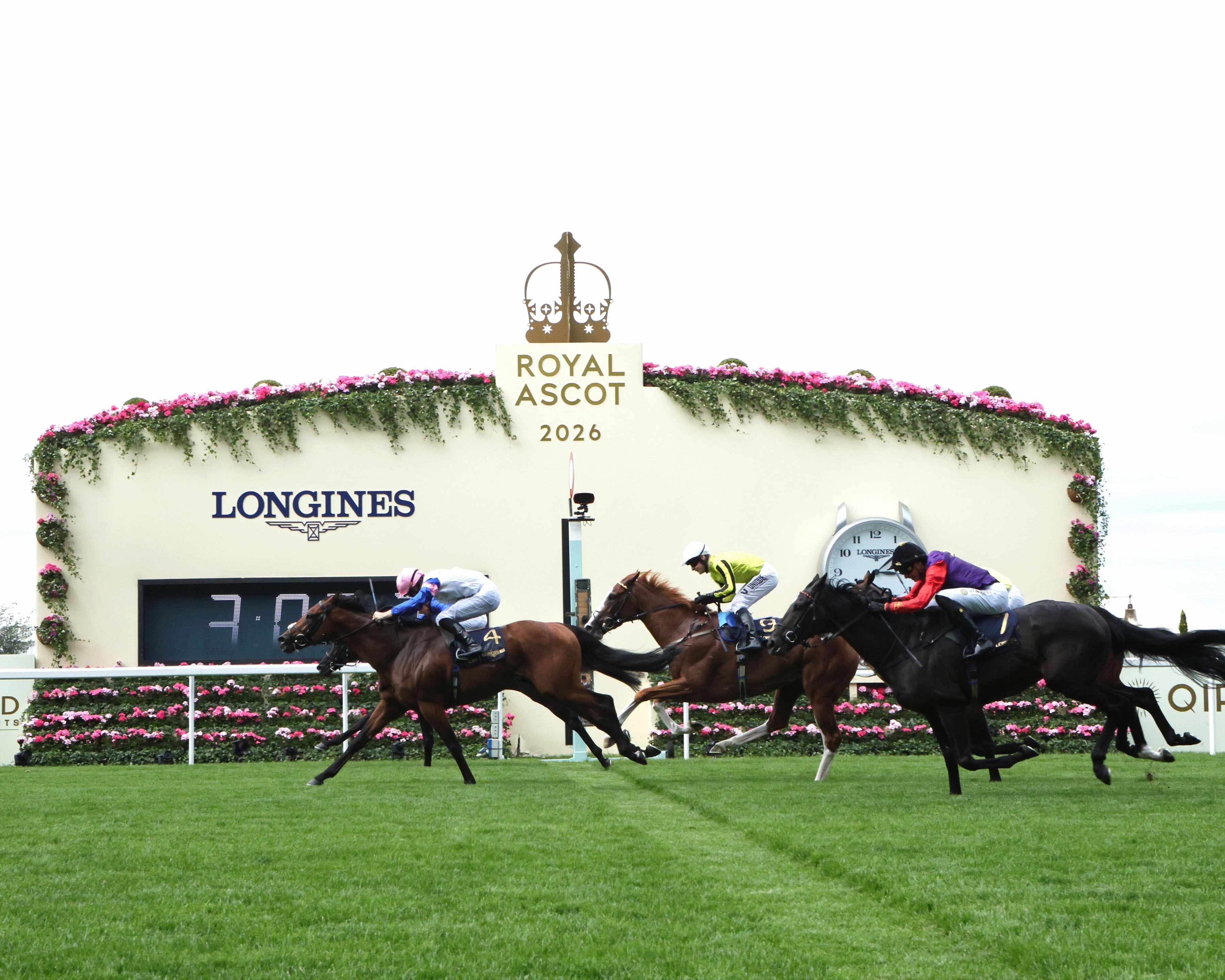
Limestone gets up in a photo-finish in the Queen's Vase (G2) at Royal Ascot (Photo by Coady Media)

Updated:
As the archetype of a prestigious festival showcasing top-caliber horses and connections, Royal Ascot by definition poses a handicapping challenge.
Although seven of my top 12 selections cracked the trifecta in their races, only Limestone managed to scrape home a winner in Wednesday’s Queen’s Vase (G2). Five of the seven lost in tight finishes, adding to the “woulda, coulda, shoulda” feeling.
I always review where my selections went wrong, what variables I overemphasized, which factoids went unheeded, in hopes of drawing the right lessons for the future. In case my self-critique can be helpful, here’s the recapitulation of what I learned from this exercise.
RELATED: LIVE Stephen Foster 2026 odds, picks, entries, betting and post times
Tuesday’s Queen Anne (G1)
Top pick: Opera Ballo appealed as a miler with high cruising speed who stays further. The idea was that he could establish a decisive break and prove too tough to catch. I preferred him to stablemate Notable Speech, who struck me as a possibly vulnerable favorite at a track he hasn’t enjoyed in the past.
Result: Third ($2.80): While I was right to try to beat Notable Speech, who wound up a lackluster sixth, Opera Ballo went too hard early into a headwind and got run down late by the unfathomable Ten Bob Tony ($121.50) and More Thunder ($3.50).
What I learned: Even hindsight can’t explain Ten Bob Tony, hitherto known as a soft-ground specialist who’d never won in only two prior tries at a mile. But trainer Ed Walker said afterward that ground-dependent horses can handle the straight track at Ascot, even if it’s good-to-firm. I should have been more mindful of Opera Ballo’s probable preference for a turning course and trainer Charlie Appleby’s change of plan to skip the Prix Aga Khan IV (Prix d’Ispahan) (G1).
Tuesday’s Coventry (G2)
Top pick: Confucius looked like the next big thing for 11-time Coventry winner Aidan O’Brien after a promising maiden win in fast time.
Result: Sixth as the favorite. Stablemate Great Barrier Reef ($14.30) prevailed in a blanket finish. Confucius was in the hunt for most of the way, but he didn’t find more when needed and went down by a grand total of 1 3/4 lengths.
What I learned: Judging Great Barrier Reef too harshly for his workmanlike win in the Marble Hill (G3), I also overinterpreted the recent trend against Marble Hill winners in the Coventry. Thus, the very one I labeled “the most obvious alternative” to Confucius got downgraded. Great Barrier Reef moved forward from that stepping stone, which already made him the highest-rated horse going into the Coventry. Confucius apparently didn’t learn as much as forecast from his win, and I should’ve viewed him as a Ballydoyle hotpot to oppose.
Tuesday’s King Charles III (G1)
Top pick: Rayevka’s past form over the course, brilliant prep win, and red-hot trainer Francis-Henri Graffard combined to make her an attractive play in a hectic sprint. The hypothesis was that she would see out the stiff five furlongs better than the Australian favorite, Overpass.
Result: Second ($4.70). In perhaps my toughest beat of the meeting, Rayevka did surge to overhaul Overpass in the final strides, only to get mugged on the line by Mission Central ($29.60).
What I learned: Aside from the peril of underestimating O’Brien, I was too doctrinaire about the difficulty of a three-year-old taking on older sprinters here. It’s happened just three times in the past 20 years, but enough to have made Mission Central a plausible contender. My biggest error of judgment was imagining that the Coolmore “lads” were being ambitious because he’s a gelding. Indeed, the lurking suspicion was that if he were a colt, surely he would have been trained for the Commonwealth Cup (G1)? After all, he’d won a six-furlong conditions race here on Champions Day. That line of thought pulled me offside from the fact that he’d beaten elders, albeit not at this level, in his five-furlong preps.
Tuesday’s St James’s Palace (G1)
Top pick: Gstaad was no match for unbeaten Bow Echo in the 2000 Guineas (G1), but I made the case for a form reversal at Ascot. As last year’s Coventry hero, Gstaad was bound to benefit from the change of venue and a more advantageous race flow, with the help of a pacemaking stablemate.
Result: Second ($2.80). Although the different race dynamics did produce a much narrower margin, Bow Echo ($3.10) was just too good. In fact, he was better than the bare margin of a short head because he had to overcome adversity amid the Ballydoyle tactics. Gstaad wasn’t helped by his early scrimmaging either, which put him further behind than anticipated. But he was given the saloon passage into the stretch when his stablemate rolled out, allowing him to come through up the inside. Unlike the ground-saving Gstaad, Bow Echo endured a wide trip, and he still managed to win.
What I learned: If Gstaad was indeed tougher for Bow Echo to subdue at Ascot, that was a relative measure. Bow Echo had so much in hand over Gstaad at Newmarket that the gap wouldn’t be bridged unless he regressed himself. It’s fine to probe for weaknesses in an odds-on favorite, but from the perspective of trying to pick top-selection winners, I should’ve recognized Bow Echo as the proverbial banker.
Wednesday’s Queen Mary (G2)
Top pick: More Champagne was admittedly a speculative stab in a race that looked wide open on paper. I’m usually cautious about American juveniles graduating into a giant field hurtling down the straightaway, but the manner of her Keeneland debut gave me ideas of her working out a stalk-and-pounce trip.
Result: 19th of 27. In a good spot early in the stands’ side group chasing eventual third Ruiva, she wasn’t going anywhere when involved in a bit of traffic and dropped back. The action unfolded on the far side, as Ballydoyle favorite Victorious ($9.30) swept past Senorita Bonita to win handsomely.
What I learned: Overthinking was my downfall. I’d praised the top two finishers as “outstanding win chances” when listing them second and third in my order of selections, but found just enough of a quibble to miss the exacta. I relapsed into my old habit of worrying about whether they were five-furlong fillies at heart. Victorious was shoehorned into this spot because of plans for a stablemate, which only reinforced my hesitation about the cutback in trip. I have to stop wondering about distance specialties with two-year-olds just getting started.
Wednesday’s Queen’s Vase (G2)
Top pick: Limestone ranked as the most logical choice after extending his winning streak to three in the 1 5/8-mile Yeats S. The Joseph O’Brien trainee is a proven battler who had never been out of the money, even in his juvenile maidens against high-profile rivals.
Result: Won ($8.30) as the second favorite in a desperate photo. Limestone’s tactical adaptability and will to win were decisive, but so was the pitch-perfect ride by Dylan Browne McMonagle. He asked the colt to secure a forward position out of the gate, eased back when others wanted to play their hand, and drove him in the nick of time to nip Del Maro.
What I learned: While I was right to prefer Limestone, I still got suckered into overvaluing the favorite, Galiyan, off his Chester maiden win, and including Ballydoyle’s Port of Spain. They wound up sixth and last, respectively. Del Maro brought strong form himself at a price, and I should’ve found a way to incorporate him into the top three instead of mentioning him underneath them.
Wednesday’s Duke of Cambridge (G2)
Top pick: Kon Tiki pushed hot favorite Blue Bolt more than expected in their mutual reappearance at Goodwood. Since favorites are historically vulnerable in this race, I tried to beat Blue Bolt. There were a few reasonable alternatives, but I went with Kon Tiki in the belief that she had more scope to improve in her second start off a longer layoff.
Result: Fourth. Blue Bolt ($5.70) continued her upward curve with a sharper performance, while Kon Tiki was shuffled farther back early. She improved her position in the stretch but plateaued late.
What I learned: I overemphasized the trend against favorites without considering that Blue Bolt had more going for her than past beaten favorites here. Also, I was too lenient in dismissing Kon Tiki’s seventh in last year’s Coronation (G1) over this course and distance. She didn’t race again until this term, so I surmised that more might have been involved in her prior flop at Ascot. Kon Tiki was relatively better this time, but she didn’t warrant that much of an upgrade.
Wednesday’s Prince of Wales’s (G1)
Top pick: Minnie Hauk was very likely to rebound from her uncharacteristic display in the Tattersalls Gold Cup (G1), a reverse that left her a higher price than she otherwise would have been here. Factoring in the long-range Coolmore/Ballydoyle intent on this target, and the projected pace war, I made the case that she could conjure up the necessary turn of foot in a fast-run 1 1/4 miles. The grand theory was that she would crash the pre-race narrative, which was all about defending champion Ombudsman and Daryz.
Result: Second ($4.20). Minnie Hauk did turn the page with a fine effort, but she couldn’t live with the explosive late kick of Ombudsman ($4.10). The one aspect I got right was that Minnie Hauk would handle the race flow and conditions more effectively than Daryz, and she gained revenge on her tough loss to him in the Prix de l’Arc de Triomphe (G1).
What I learned: I became hyperfocused on the Minnie Hauk rebound angle and her likelihood of beating Daryz. Ombudsman was the likeliest winner in the scenario tailor-made for him, and as I even wrote in the selections piece, my original idea was to put him on top. The price play got to me. If I had kept Ombudsman on top, and cleverly used my Minnie Hauk theory to prefer her to Daryz as the respective second and third, I would’ve had the cold trifecta.
Saturday’s Norfolk (G2)
Top pick: Star Prospect had beaten the Norfolk favorite, Carry the Flag, with a rattling run on debut. With an excuse for his ensuing start, I expected him to bounce back in more advantageous conditions for the in-form Joseph O’Brien.
Result: 13th of 21. Although Star Prospect figured to come from off the pace, he hurt his chances by rearing up in the stalls and finding himself farther behind early. The winner, Orthodox ($16), settled within striking range of the leaders and rolled late in an impressive display.
What I learned: If I rightly looked askance at Carry the Flag as the favorite, I shouldn’t have gone out on a limb for Star Prospect. Rather, I should’ve paid more attention to the market clues in favor of Orthodox, especially in these two-year-old dashes that are notoriously difficult to decipher.
The Clive Cox pupil was odds-on when he won first time out at Salisbury – I now know that’s the place to look for his well-regarded types – and it was significant that he continued to be well backed (9-2 in the British odds) in a race as contentious as the Norfolk. Orthodox would also have been a superb pedigree play, as a Havana Grey colt whose “aunt” won the Queen Mary. Then again, past losses have taught me to detach myself from overreliance on pedigrees!
My uncertainty was whether the Salisbury race amounted to anything, when the real lesson was how much Orthodox could improve from a green-as-grass victory. I bracketed Orthodox with a couple of other good-looking maiden winners at the bottom of the selections, getting a word in without a meaningful endorsement.
Saturday’s Hardwicke (G2)
Top pick: Kalpana’s form at Ascot made her the favorite, particularly her second to Calandagan in last summer’s King George VI & Queen Elizabeth (G1). I didn’t see a compelling reason to oppose her, even on the good-to-firm ground, on the theory that connections would scratch if they weren’t happy with conditions.
Result: Second as the favorite ($3). Kalpana ran another mighty race, but she struck the front a bit early in the stretch and couldn’t fend off old foe Giavellotto ($17.40).
What I learned: Since connections were making noises about the ground, I should’ve discerned Kalpana’s vulnerability as a win candidate. Giavellotto was my second choice anyway, so it wouldn’t have taken much imagination to chance him on top. Indeed, I recounted how he’d beaten Kalpana before! The worst mistake was overlooking the fact that Oisin Murphy gets the best out of Giavellotto, negating my concern that he might have too much ground to make up. Murphy had him ideally placed to pounce at the right time. Another missed opportunity for a cold trifecta, with Goliath listed third.
Saturday’s Queen Elizabeth II Jubilee (G1)
Top pick: Joliestar brought the right profile as a five-time Australian Group 1 winner, beaten only a couple of lengths by world phenom Ka Ying Rising. Perennial champion trainer Chris Waller is careful with his Royal Ascot raids, not the type to go for the fun of it, and she was eligible to handle the stiff six furlongs. If ever there were a race to keep it simple, this was it.
Result: Third as the favorite in a four-way finish ($2.80). Camped a bit closer to the speed than expected, without cover, and striking the front, she was nailed by class-climbing Almeraq ($78.50) and Japan’s Satono Reve. France’s Stolen Kiss flew down the outside to miss the placings by a head in fourth.
What I learned: I underestimated Almeraq, who had never contested a Group race before, let alone a Group 1 with an international cast advertising Ka Ying Rising’s formlines. His progressive profile went unheeded. I made the same mistake with the upwardly mobile Stolen Kiss. While he had beaten my second choice, Sajir, twice, I practiced a form of “jury nullification” by claiming that Sajir was racing into shape and relied too heavily on reasserting his back class. Given the chaotic nature of the European sprint division, I need to recognize the fluidity within its ranks rather than hold fixed ideas about class levels.
Saturday’s Jersey (G3)
Top pick: The Prettiest Star was one of the contenders with my favorite angle in this race – dropping down in class and distance from the mile classics. I talked myself into her because of her lightly-raced profile, her good fourth in the 1000 Guineas (G1), and her recent acquisition by Wathnan Racing.
Result: 11th of 16. The Prettiest Star wilted badly behind Thesecretadversary ($48.60). It didn’t help that she was in no-man’s-land, out on a wing in the middle when the field split into two groups. Still, that can’t account for the worst result of her life. She was diagnosed with “mild heat stress” postrace, according to the stewards’ report.
What I learned: This was my worst loss of the whole meeting because Thesecretadversary fit my classic performer paradigm to a tee, with course-and-distance form to boot. In advance, I thought he could go well here. What happened in the intervening days, beyond sleep deprivation, to make me reduce him to a minor mention in the selections? It was a case of overanalyzing everybody with any sort of credentials and missing the forest for the trees.
Two red herrings cost me the shot at a valuable winner: his three-pound penalty for a Group 3 win, which I somehow magnified into a weight-carrying task reminiscent of Phar Lap or Forego, and the fact that trainer Fozzy Stack just sent out his first Royal Ascot winner on Thursday (Chesham S. star Nola Soul). Stack is a terrific horseman, but what got me was the probability angle: what were the chances that he’d win twice? It turned out they were his only starters of the whole meeting, and he went 2-for-2!
If I’d known that Thesecretadversary’s price would balloon beyond recognition, would the calculations have changed? Thesecretadversary presumably drifted up to far bigger odds than forecast because of his draw on the far side (post 2). All things being equal, it was better to be drawn among the high numbers on the near side, but the best horses were overcoming a low draw. He was certainly among them, traveling well at every stage and fighting off Take Charge Star (post 1) to prevail.
We’re supposed to learn more from our failures than our successes, as the saying goes, so this Royal Ascot ought to serve as a graduate-level seminar.