Tall Tales of the Track - She Ran for Roses and Lilies
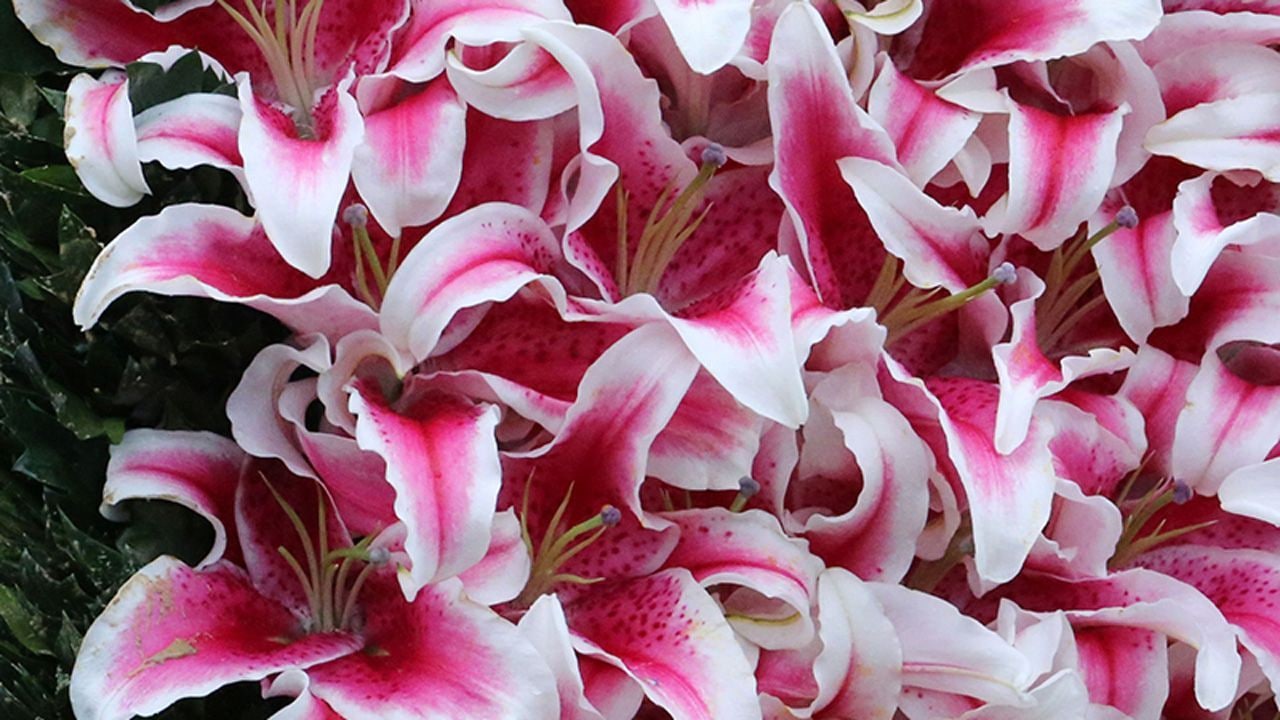
Lilies (Photo by Coady Photography/Churchill Downs)

Colonel Meriwether Lewis Clark conceived the Kentucky Oaks and the Kentucky Derby as the Bluegrass’s own versions of the classic tests contested at Epsom. Both were originally run at 1 1/2 miles, with the Derby going to 10 furlongs in 1896 and the Oaks run at distances from 1 1/16 miles to 1 1/4 miles in its 152-year history. The pair also have been scheduled at a variety of times throughout the month of May, with the Derby often coming on the first day of Churchill Downs’s spring meet and the Oaks on that meet’s final day.
That scheduling allowed fillies to run in both races if their connections chose, with three fillies parlaying their turns in the Run for the Roses into a victory in the Kentucky Oaks.
Flamma
The chestnut filly, Flamma, started life at August Belmont’s Nursery Stud in Kentucky. She was by Hastings, best known for producing Fair Play, Belmont Stakes winner and sire of Man o’ War, out of the Rayon d’Or mare Flittermouse. On the top side of her pedigree is speed, as Hastings won both the Toboggan at six furlongs and the Belmont at 11 furlongs, and on the bottom side, stamina, as her damsire brought home the St. Leger Stakes. Her full sister Fieldmouse won the Saranac Handicap and the Fashion Stakes at Belmont.
Belmont sold the yearling Flamma at auction to James “Sunny Jim” Fitzsimmons for $400. The future Hall of Fame trainer then sold the filly to brothers T. R. and E.F. Condran, with one or the other listed as her owner in various sources. At two, Flamma raced a whopping 33 times at age two, winning six and then finishing second in four more. The Condrans raced their horses up and down the East Coast, going as far south as South Carolina and as far north as New York.
Flamma started her three-year-old season with several starts at Charleston, including a turn in the 10-furlong Palmetto Derby. With James Butwell in the saddle, she was part of a three-horse blanket finish, behind the winner Jawbone, who had a nose in front of Cracker Box, who had a head advantage over the filly at the wire. Then, she came west to Louisville and Churchill Downs for the Kentucky Derby, where she would team up with jockey Johnny Loftus for this Kentucky classic on the track’s opening day.
After acting up at the start, Flamma was late getting away from the barrier and was last through the first half-mile. She progressively made up ground to finish third behind a tiring Worth and a fast-finishing Duval. The Condrans and trainer John Duffy then pointed her toward the Kentucky Oaks on the final day of Churchill Downs’s spring meet, 17 days after her third in the Derby. She started slowly but found the sloppy going to her liking and steadily moved up through the field to win by two lengths.
At four, Flamma won the Ladies Handicap at Belmont Park, but did not race on at age five, dying before she could start her 1914 season.
Bronzewing
The April 7, 1920, edition of the Daily Racing Form shared a unique circumstance at Churchill Downs: the presence of one broodmare and her four foals. Trainer Dan Lehan’s barn held Bronzewing and her first four foals, including a newborn foal actually born at the racetrack. The first two, Alex, Jr. and Humphrey, had a special connection to the mare that produced them: they were named for her former owner.
Foaled at Garret D. Wilson’s Iroquois Stud near Lexington, Bronzewing was a daughter of stakes winner Stalwart out of Miss Dolly. Wilson sold the chestnut filly to Alexander P. Humphrey, Jr., a Louisville lawyer, at a Lexington yearling sale for $200. As a two-year-old, she raced mostly in Kentucky, starting 25 times and winning three that first season. Her best season came at age three, starting 1914 with a second in a six-furlong allowance at the Kentucky Association racetrack in Lexington before taking the one-mile Ashland Oaks. Trainer Lehan then tried her in the Blue Grass Stakes against colts and geldings, where she outlasted a handful of fellow potential Kentucky Derby starters to win by a neck. That set her up for a turn under the Twin Spires.
Over a fast track on opening day at Churchill Downs, Bronzewing lingered toward the back of the field of seven, waiting for the stretch to mount her usual run at the lead. Though she was able to make up a chunk of ground, she could do no better than third behind Old Rosebud, who set a record of 2:03 2/5 for the ten furlongs. Nearly two weeks later, she was back in the paddock for the Kentucky Oaks, this time facing other distaffers over the 1 1/16 miles. She started slowly, lingering toward the back of the pack per her usual running style, and then came on in the stretch, her momentum helping her catch Casuarina in the final strides.
An injury in the Latonia Derby cut short that season, and when she came back at age four, she was not quite the same. Humphrey retired her after that season and then bred her to Ballot. By 1917, Bronzewing belonged to Lehan, who likely bought her from Humphrey as he trained to become an airman for the United States military in the early days of American participation in World War I. Humphrey was killed in a training accident that year, which prompted Lehan to name her first two foals for her former owner. She died at Lehan’s farm in 1934.
Viva America
McGee, a son of the British horse White Knight, was his sire’s lone foal, the unraced son of Epsom Derby winner Sir Hugo, gelded soon after covering McGee’s dam, Remorse. As a racehorse, he was fast in a 53-start career, with his record time for 5 1/2 furlongs standing as his most remarkable accomplishment. However, as a sire, McGee made his mark, first with Donerail’s record-breaking 1913 Kentucky Derby win as a 91-1 shot, and then in 1918 with more classic victories from the immortal Exterminator and a daughter named Viva America.
She was bred at George J. Stoll’s The Meadows near Lexington, where Pink Rose, a daughter of 1880 Kentucky Derby victor Fonso. By age two, she was owned by Charles Thomas Worthington and trained by William Perkins in a season where she won two stakes: the Clipsetta Stakes at Latonia and the Edenwold Stakes at Windsor in Ontario. Overall, she won eight of her 12 starts in 1917, marking her as one of the leading fillies in what was then known as the West, or the Kentucky circuit.
Viva America started her three-year-old season with in-the-money finishes in the Bourbon Purse, the Ashland Oaks, and the Derby Trial, all at the Kentucky Association track in Lexington. Pleased with her performances, Worthington, who had taken over as her trainer, sent her to Louisville to contest the Kentucky Derby against favorite War Cloud and future Hall of Famer Exterminator. She led early and then tired at the six-furlong mark, holding on to finish third behind Exterminator.
Two weeks later, on Churchill Downs’ closing day, she joined a short field of five other fillies for the Kentucky Oaks. She took the lead from the start, held her challengers at bay, and won easing up at the wire. Her win made her sire McGee the second to produce a Kentucky Derby and Oaks winner in the same year.
Viva America raced for two more seasons, with Worthington selling her to S. Kenney Nichols for $10,000 in 1919. She produced several foals for Nichols, who died in January 1927, and then sold her at a dispersal sale to Arthur B. Hancock of Claiborne Farm for $5,200. Viva America passed away at the farm in 1939.
The Kentucky Derby famously settled into its spot on the first Saturday in May in 1932, but the Oaks would not become part of that special weekend until 1944. That gave more than one filly the chance to make a name for themselves in both, with Flamma, Bronzewing, and Viva America all making history by running for roses and bringing home lilies too.