Tall Tales of the Track – Under Fire


March 17th, 2026
When Count Turf crossed the finish line first to win the 1951 Kentucky Derby, he was the third generation of Derby winners, his sire Count Fleet and grandsire Reigh Count both also victorious under the Twin Spires. In 1928, Reigh Count brought John and Fannie Hertz the first of their classic victories, but a conflict involving John’s taxi company almost ended the horse’s life. When it counted, when history was on the line, one man’s quick-thinking response made all the difference.
The first in a three-generation line of @kentuckyderby winners, Reigh Count later forged a successful racing career in England. 🏴
— TwinSpires Racing 🏇 (@TwinSpires) January 28, 2024
Also in 1928, The first Academy Awards are held in Los Angeles.
We are 97 days out from #KYDerby150! 🌹 pic.twitter.com/zMVn0BtE95
Building Greatness
When Schandor Herz left Szklabinya as a five-year-old boy, he could not have imagined how the journey from what is now Slovakia to America would change his life. His family landed in the Chicago area, and the young Schandor became John Daniel Hertz, who left home at age 10 after his father physically abused him. Hertz went on to sell newspapers, tried his hand at boxing, became a sportswriter, and even managed other boxers when he spied an opportunity: taxis.
Seeing a future in the new concept of taxis, Hertz purchased a fleet of used cars and then founded the Yellow Cab Company in 1915, adding curbside pick-ups and even helping the city of Chicago pay for traffic lights to make driving in the city safer. He then expanded into car rentals in the early 1920s, building the Hertz DriveUrSelf Company. This new company built fleets of cars for customers to pick up at railroad stations and then drive themselves around the area.
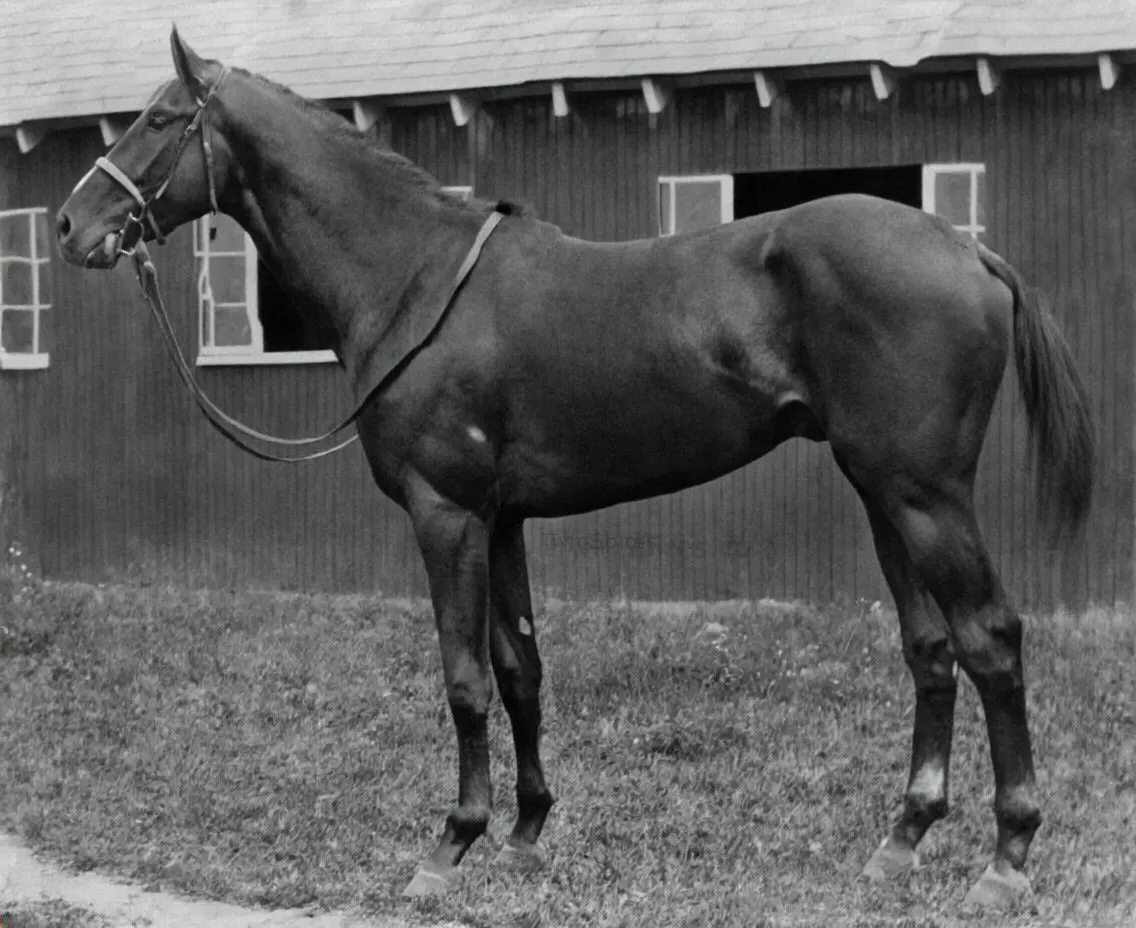
Hertz’s success allowed him and his wife, Fannie, to invest in horses and racing in the early 1920s. Hertz had become enamored of the sport in his youth after working as a valet at a bush track in Roby, Ill. The couple bought Leona Farm near Cary and set up 1914 Belmont Stakes victor Luke McLuke as their flagship stallion and stocked their farm with broodmares. Racing their horses in Fannie’s name, the pair saw a colt racing in Willis Sharpe Kilmer’s colors try to savage a competitor in a two-year-old race at Saratoga. Enamored of his moxie, the couple bought the colt Reigh Count from Kilmer for $12,500 and then discovered they had invested in a darn good horse.
Reigh Count won the Kentucky Jockey Club Stakes and the Walden Handicap and came in second in the historic Futurity at two, setting the stage for a three-year-old season that would be memorable in more than one way.
Reigh Count came into Kentucky Derby week as the big race’s favorite and came away with an easy win over a large field of 21 others. He missed the Belmont Stakes with an injury but returned to the track to win the Miller Stakes, the Huron Handicap, and the Saratoga Cup, all at Saratoga, and then the Lawrence Realization and the Jockey Club Gold Cup at Belmont Park. His season done, Reigh Count went back to Leona Farm to rest up for his four-year-old season.
This #EpsomDerby week marks the 90th anniversary of Reigh Count's victory in the Coronation Cup (G1). @VPHanson has the story on how the @KentuckyDerby winner conquered legendary @EpsomRacecourse https://t.co/WMp7fcVKnL (Sport and General photo) pic.twitter.com/rHjKcenrjY
— TwinSpires Racing 🏇 (@TwinSpires) May 28, 2019
Danger Pays a Visit
On Oct. 1, 1928, barn workers went about their evening work caring for the horses in their charge, including Reigh Count and Anita Peabody, the excellent filly that had beaten the colt in the 1927 Futurity. At some point later that evening, they smelled gasoline, and suddenly both ends of the hay loft of Leona’s main barn were on fire.
The smell of the burning hay, the squeals of panicking horses, and the shouts of the men woke stable hand and former jockey Jimmy Allen. He knew he had to go into the burning barn and get as many horses as he could out of the inferno. Allen reached the Kentucky Derby winner’s stall and found the colt panicking as the heat and the smoke grew around him. Allen grabbed a silk riding shirt and tied it around the horse’s eyes to calm him enough to climb on Reigh Count’s back and guide him out of the barn. Anita Peabody was in a separate barn but was also evacuated just in case the fire spread. In all, 11 of the Hertzes’ horses died in the fire.
As the authorities investigated the fire, they found it had been deliberately set: a steel gate near the barn had been broken down, and witnesses reported seeing flames coming from both ends of the brick barn before the whole structure was engulfed. The apparent arson raised questions about who would want to target the Hertzes this way. Was it gamblers or other racetrackers who wanted to target Reigh Count? Or was it something more sinister, a by-product of an ongoing taxi war in the Chicago area?
Competition between Hertz’s Yellow Cab Company and rival Checker Taxi, founded by Frank Dilger, had ignited a war between the two companies that lasted much of the 1920s. Bombings, gunfights, drive-by shootings, and more dotted Chicagoland headlines throughout the decade as Yellow Cab and Checker Taxi drivers fought over territory and customers. Organized crime gangs, which had become more prominent during the Prohibition Era of 1920-1933, also became involved. In the days prior to the barn fire at Leona, two Yellow Cab garages had been bombed, and an attempted arsonist had targeted both Anita Peabody and Reigh Count while they were at Saratoga in August.
The Hertzes’ Derby winner went on to race in England in 1929, winning the Coronation Cup at Ascot and then finishing second in the Ascot Gold Cup. He returned to the United States the following year to head the Hertzes’ breeding program at Leona. His opportunities were limited in Illinois, so his owners then moved him to Claiborne Farm in 1936 and then to their own Stoner Creek Stud in 1939. In 1940, his son Count Fleet was foaled and went on to become the sixth Triple Crown winner and one of the 20th century’s most prolific sires. All of this was possible because of Jimmy Allen’s quick thinking in a moment of life-threatening danger.