Betting the Handicaps at Royal Ascot for Day 4 on June 19
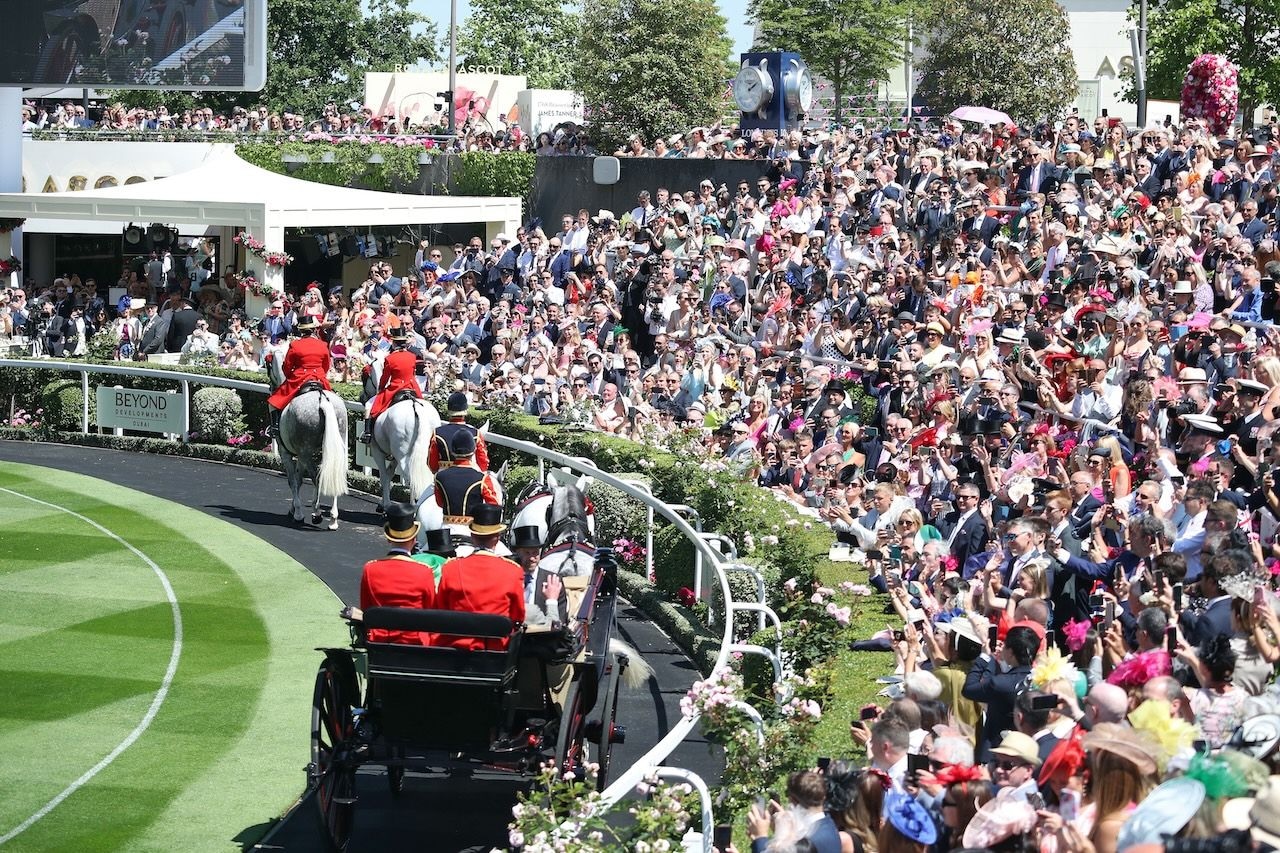
Royal Ascot scenic (Photo by Horsephotos.com)

Updated:
Day four at Royal Ascot has another great selection of handicaps for punters. Only the 1 1/2-mile Duke of Edinburgh S. is open to older horses; the other two are the Sandringham for three-year-old fillies over a mile, and the Palace of Holyroodhouse for all three-year-olds at five furlongs.
The Duke of Edinburgh is an even contest, but the odds aren’t quite as favorable given that the field is limited to 19 runners at 1 1/2 miles. The Sandringham has plenty of runners, but it also has a strongly-fancied favorite in the form of the Gosden-trained Seet at 5-1; the strategies there include using her as a banker in exotics or else going against her and taking something at good odds.
However, I’ve decided to aim at Palace of Holyroodhouse, which looks the most open of the handicaps, and the most likely to spring a reasonable price.
Royal Ascot, Race 7, 1.10 p.m. ET: Palace of Holyroodhouse (Handicap), turf, 5 furlongs, 3-year-olds, $160,000
Given its position in the season, this race can attract horses that were running in black-type races beforehand. This is definitely the case here: the top two horses in the weights, #1 Dickensian (12-1) and #2 Moojeed (15-1), both ran in stakes company in their last starts and performed very well. They look decent chances despite their weight allocations.
Dickensian was placed four times in stakes company as a two-year-old, including a second in the Windsor Castle at this meeting, and broke through for a victory in the Westow at York May 14. Moojeed, trained by Francis-Henri Graffard in France, was third at Group 3 level in Chantilly May 31.
I don’t often like horses at the top of the handicap, but these two have an advantage over some of the shorter ones in the market: their gates.
When assessing the handicaps over the straight mile or less at Ascot, it always pays to watch the previous day's racing to see if there’s any potential bias on one side of the course. This year, the evidence from day two suggests a possible bias for horses running on the near or stands side; the last three races on the straight course all went to horses on that side.
If this is the case, you may be best looking for horses with stands-side barrier gates, ie those with the higher numbers. This could be partly negated if all the horses track over to the stands side, but the horses starting closer to the outside rail may be in the best position.
In the Palace of Holyroodhouse, Dickensian has barrier 19, while Moojeed has gate 24. This may help them both, especially compared to the two morning-line favorites, #18 Gold Digger (6-1) and #14 Westport (8-1), who have drawn gates 10 and 3, respectively. They deserve their positions in the market: Gold Digger, after winning at Windsor on June 1, and Westport after winning at Hamilton on May 3.
Interestingly, the U.S. has two runners in this race, both well-regarded in the market. #7 Sandal’s Song (15-1), trained by George Weaver, finished second in the Norfolk (G2) last year and put up a nice effort, finishing second to Commonwealth Cup (G1) contender Outfielder at Churchill Downs on May 9.
Unfortunately, he’s drawn 11, whereas the other American, the Wesley Ward-trained #6 Bacio (12-1), has the decided advantage in gate 31. He arrives across the Atlantic after decisively winning a claiming event at Churchill Downs April 28. Ward knows how to get a horse ready to run at Royal Ascot, and Bacio looks well suited here.
Of the others, #13 Jazl (15-1) looked a horse going places when he won at Leicester May 25, but he hasn’t been helped by drawing gate 5. Those with better draws that look in good form include #11 Simplify (15-1) and #26 Stargazed (15-1).
It’s an interesting race, but the combination of barrier draws, form, and historic records are enough to put me in Bacio’s camp.