Handicapping 101: Playing Pedigrees on Muddy Tracks
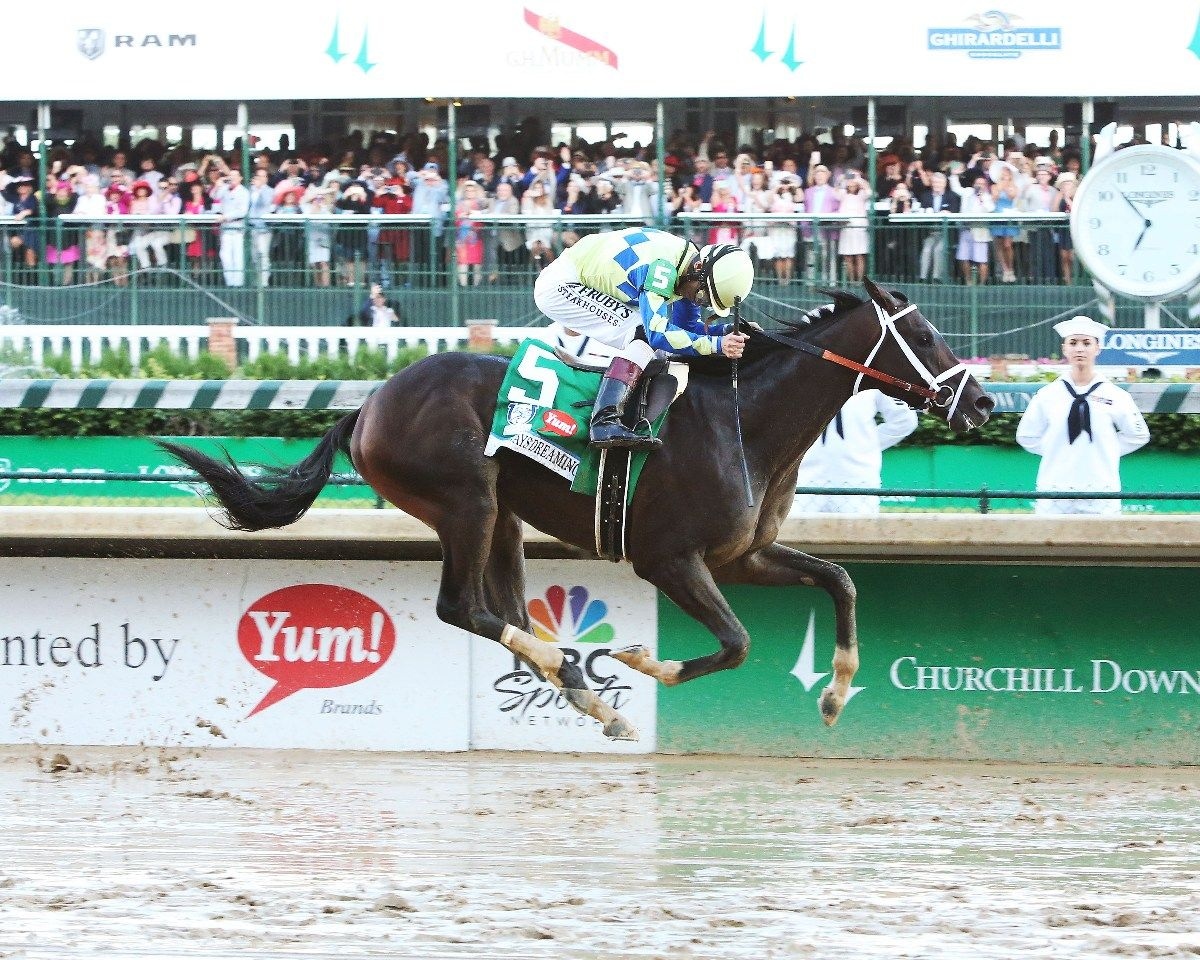
Always Dreaming winning the 2017 Kentucky Derby (Photo by Coady Photography)

Updated:
A rain-soaked track officially labeled wet fast—that’s one place where pedigree handicapping can come into play.
When handicapping major races like the Kentucky Derby (G1), it’s easy to be overwhelmed by the amount of data available to help you make your selections.
Fractional times? Workouts? Running styles? Pedigrees? Jockey assignments? Post positions? Obscure statistics? It can be hard to weigh all of these factors and come up with confident bets.
With so much information available, it can seem counter-intuitive to toss most of it aside and focus on a single factor or two, but once in a while that can be a productive strategy. Such was the case at the 2017 Kentucky Derby, when a remarkably simple play based on pedigrees could have yielded impressive returns.
The 2017 Kentucky Derby was contested over a wet-fast track, and that’s where pedigrees can come into play. Examining the pedigrees of each horse in a given race can guide you toward horses that have the breeding to enjoy wet conditions. Did Horse A’s sire win a big race in the mud? Has Horse B’s grandsire earned a reputation for siring mud-lovers?
Two stallions who can generally be associated with success on wet tracks are Empire Maker and Smart Strike. Empire Maker won the 2003 Belmont (G1) over a sloppy track, and his descendents include the accomplished mud runners American Pharoah and Pioneerof the Nile. Smart Strike’s top progeny include Curlin and Lookin At Lucky, champions who scored big wins on wet tracks, and Curlin has likewise proven to be an influential mud sire.
Notably, the 2017 Kentucky Derby field included five descendants of Empire Maker and Smart Strike—Lookin at Lee (son of Lookin At Lucky), Always Dreaming (son of Bodemeister and grandson of Empire Maker), Battle of Midway (son of Smart Strike), Classic Empire (son of Pioneerof the Nile), and Irish War Cry (son of Curlin).
Betting all five horses to win would not have been an effective strategy, but playing them in the more lucrative multi-horse bets like the exacta, trifecta, and superfecta would have paid off in a big way after Always Dreaming, Lookin at Lee, Battle of Midway, and Classic Empire ran 1-2-3-4. Playing a $1 exacta box (so you would have a winning ticket regardless of the exact order in which the horses finished) would have cost $20 and yielded a return of $168.10. Playing a $1 trifecta box would have cost $60 and returned $8,297.20. Boxing all five horses in the superfecta wouldn’t have been cheap (costing $120), but the return was an eye-catching $75,974.50.
When muddy conditions make handicapping difficult, researching pedigrees can lead to some impressive payoffs.