Tall Tales of the Track: She Was Made of Sterner Stuff
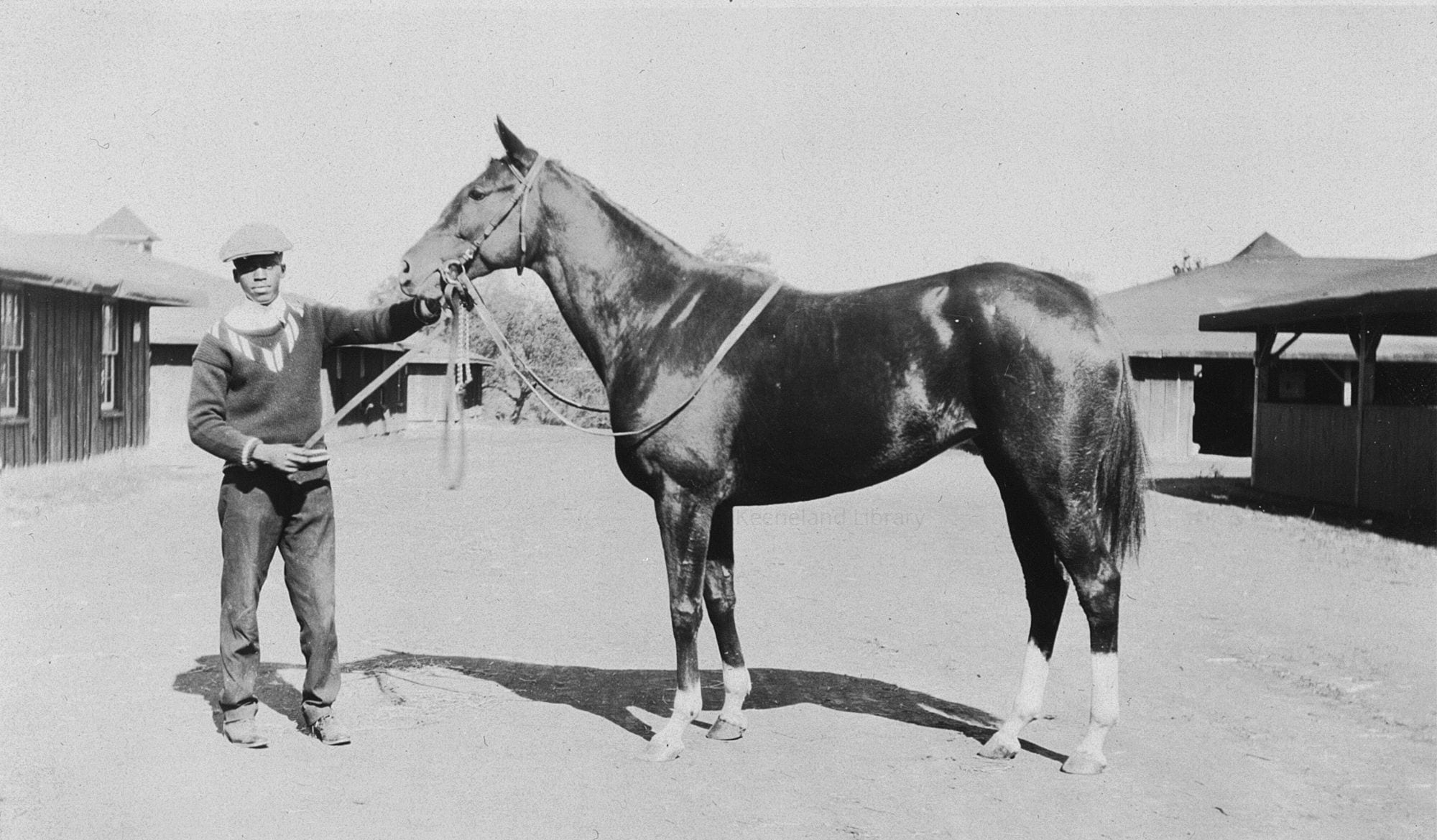
Easter Stockings (1930). (Photo courtesy of the Keeneland Library / Credit to the Sutcliffe Collection)

Updated:
In May 1930, a ten-horse field lined up at Churchill Downs for a standard overnight handicap, but the real story belonged to a filly who had worn the lilies two years earlier. The chestnut filly Easter Stockings went head-to-head with two Kentucky Derby winners over the same oval where they had stood tall until the Twin Spires.
Bred in Virginia and sired by a Triple Crown winner, Easter Stockings built a record against Derby winners that stands as one of the most remarkable achievements by any Kentucky Oaks champion in the race's history.
Setting the Stage
On May 16, 1930, the next day’s Kentucky Derby was on everyone’s mind. As Louisville prepared for the influx of racing revelers – including the 17th Earl of Derby, whose family supplied the moniker – that day’s card featured an overnight race, the Shady Brook Handicap, a 1 1/16-mile test with a purse of $2,200. The 10-horse field featured a handful of lightweights alongside some surprising heavy hitters in Easter Stockings, the 1928 Kentucky Oaks winner, and Whiskery and Clyde Van Dusen, both Kentucky Derby victors.
A daughter of the first Triple Crown winner, Sir Barton, Easter Stockings arrived at the Shady Brook in the colors of Audley Farm, her breeder/owners B.B. and Montfort Jones, who had purchased the historic Virginia farm for their racing and breeding operation. She had plenty of experience racing against colts and geldings and at handicap weights, with wins in the Crusaders Special Handicap and a second to Martie Flynn in the Clark Handicap.
Bred by Harry Payne Whitney, Whiskery had won the 1927 Kentucky Derby in those legendary Eton blue and brown colors before being sold the following year to Arthur B. Hancock, William Woodward, and Charlie Stone, who retired the horse to stud. When Whiskery turned out to be sterile, he was gelded and put back into training but was not the same horse he had been in his earlier seasons. By 1930, Woodward and Hancock had sold their shares to Stone, who raced the son of Whisk Broom II in his Morven Stud colors.
Clyde Van Dusen, named for his trainer, was ‘a mud-running fool’ according to his Derby rider Linus ‘Pony’ McAtee after winning the 1929 edition over a sloppy track. A gelding, the petite son of Man o’ War had two good seasons at age two and three but then tailed off after that. By 1930, he was not the same horse, but still a hard trier. He and Easter Stockings carried the same weight in the Shady Brook, 112 pounds, while Whiskery was among the lighter-weighted horses at 103 pounds.
On a fast track, the ten starters loaded into the new Waite starting gate that awaited the Kentucky Derby field the next day; this overnight stakes was the erstwhile setting for a battle between classic winners.
Battling the Best
Easter Stockings broke from post 4 and got out to a fast start, taking the lead from the first jump. Whiskery was to her inside at the break while Clyde Van Dusen was outside of them in post 7. With the daughter of Sir Barton at the front, the Morven Stud color bearer lingered behind her in third, while Clyde Van Dusen was midpack early.
Easter Stockings increased her advantage in the stretch, putting a length between her and the field, before Whiskery mounted his bid inside the last furlong to shrink her lead to a neck at the wire. Clyde Van Dusen was not at his best that day, finishing many lengths behind in last.
Whiskery and Easter Stockings met again eight days later, again at Churchill Downs, this time in the Grainger Memorial Handicap. A few horses from their previous meeting were also in the field, including The Nut, Pigeon Hole, and Royal Julian, but again Easter Stockings was able to get the win. She lingered behind the early leaders and then moved to the lead in the stretch of the 10-furlong test. Whiskery was not a factor and finished fourth.
Easter Stockings finished her career with a record of 68-22-16-8 but could not pass on her hardiness and speed. She had limited fertility, producing only one foal, a colt named Yarn Sox. However, this Kentucky Oaks winner’s record against Triple Crown classic victors was unparalleled: not only had she defeated Whiskery and Clyde Van Dusen, but she also beat 1926 Preakness winner Display in the Crusaders Special at Hawthorne in 1929. She stands as her sire’s best performer, channeling the speed and stamina that made him the pioneering victor of American racing’s most elite accomplishment, the Triple Crown.