AI Predictions: Betting the Kentucky Derby with Claude and Gemini

Updated:
“WHY DID YOU DO THAT!?” I blurted loudly as I threw my head back to stare at the office ceiling, then looked out my door to see if anyone was staring with concern... self-deciding, project-breaking scope-creep is the ever-loving name of the game with LLMs right now.
Alas, battling through the toddler-like positive intent still led to some interesting discoveries in leading Agentic AI to self-handicap the Kentucky Derby.
Admittedly, I grew in my prompt-creation logic, aka patience, on this journey toward the end goal’s vision, stopping short of suggesting prowess in AI prompt-engineering. Growth largely emerged in the effort to create visual graphs to map the logic that the LLMs developed in horse data comparisons or timeline trend analysis.
Both selected agents followed very different logical comparison progressions and analyses using the same provided data to establish opinions about the Kentucky Derby hopefuls.
The results? Both agents landed on a consensus winner, very similar exactas with different opinions on the bottom selections, and finally, very different approaches to trifecta exotic ticket structures. Thus, the value play logic evolved differently. Data presented through April 20, 2026, at 8 a.m. ET.
What is this all about? TL/DR
In the spirit of TwinSpires’ new tools backed by the power of AI in PaddockPro and Race Previews, I have utilized AI Large Language Models (LLMs) for a unique approach in analyzing 2026 Kentucky Derby horses and their perceived value using several metrics ahead of Derby week.
RELATED: 2026 Kentucky Derby Brisnet Speed Rating Report
In short, AI handicapped the Kentucky Derby to form betting ticket suggestions.
Using publicly available data that presents various factual information, professional expert opinions, and past performance-related trends, I engaged with two popular AI LLM agents to review equal data points and form their own opinions on whom they would suggest betting in the Kentucky Derby.
RELATED: How to calculate fair odds for the 2026 Kentucky Derby
Origin Question: How can I ask AI to predict the winner of the Kentucky Derby using a standardized data analysis approach and present the results in a visual format? What is their best $100 ticket, and what trends or standout information exists?
Can I do so using a sensible methodology that will allow for a sound outcome we can monitor ahead of the Kentucky Derby draw, to analyze how the perceived outcome by AI compares with public and experienced horseplayer behavior?
THE ORIGINAL PROMPT
The end goal is to create graphs to help people at all betting levels identify the best ways to predict the 2026 Kentucky Derby winner.
Our base data needs to be based on facts, and these facts are found in the Road to the Kentucky Derby points, Past Performance data, speed rating data, Kentucky Derby future wager opening odds, and closing odds.
Our professional opinion data points are Kentucky Derby power rankings and Kentucky Derby fair odds.
One data point could show moments a horse is included or mentioned in the Kentucky Derby Future Wager offerings or on the Power Ranking or Fair Odds lists.
Which graphs should we create based on the provided data?
Popular graphs compare implied value and implied odds, and also show where opinion and data reveal underlays and overlays, highlighting opportunities.
What is your best betting ticket?
How would you bet if you had $100?
- I asked both LLMs to each use the Points order of the Kentucky Derby leaderboard as the main organizational method for ordering lists and visual aids
- The LLMs would draft a plan, a statement of process, which displayed as an organized list of the data points AI wanted to focus on to help achieve the prompt goals
- The ingested (uploaded) data points included: RTKD Leaderboard point earnings, BRISnet Speed Ratings, All KDFW Pools opening morning line and closing mutuel odds, BRISnet Horse Past Performances, Connection information (such as trainers), initial pedigree information (Sire & Dam), Kentucky Derby Power Rankings, and TwinSpires Fair Odds
Who is Gemini AI suggesting you bet on for the Kentucky Derby?
Gemini's interpretation of it's own article in a feature graphic (Courtesy of Generative Gemini)
Further Ado, Commandment, and Incredibolt with considerations for Danon Bourbon, Potente, and Napoleon Solo.
Gemini said, “This ticket is designed to maximize profit by anchoring the most likely winner and pairing him with the field's biggest mathematical ‘overlays.’”
- Win Bet ($40)
- $40 to Win on Further Ado
- Exacta ($30)
- $5 Exacta Box: Further Ado / Commandment / Incredibolt
- Trifecta ($30)
- $1 Trifecta Key: Further Ado / Commandment with Incredibolt, Danon Bourbon, Potente, and Napoleon Solo
Note that the logic for each bet can be read in the full handicapping synopsis by Gemini and I here.
How did Gemini handicap the Kentucky Derby?
When I sent Gemini off to the races of sifting through the data and establishing a plan of flowing logic to arrive at a best bet for the Kentucky Derby, the LLM wasted no time in encapsulating the narrative of ‘The Titan & The Assassin.’ The personality, if I can call it that, was quite amusing. The LLM chose to weave a narrative that combines handicapping through the process.
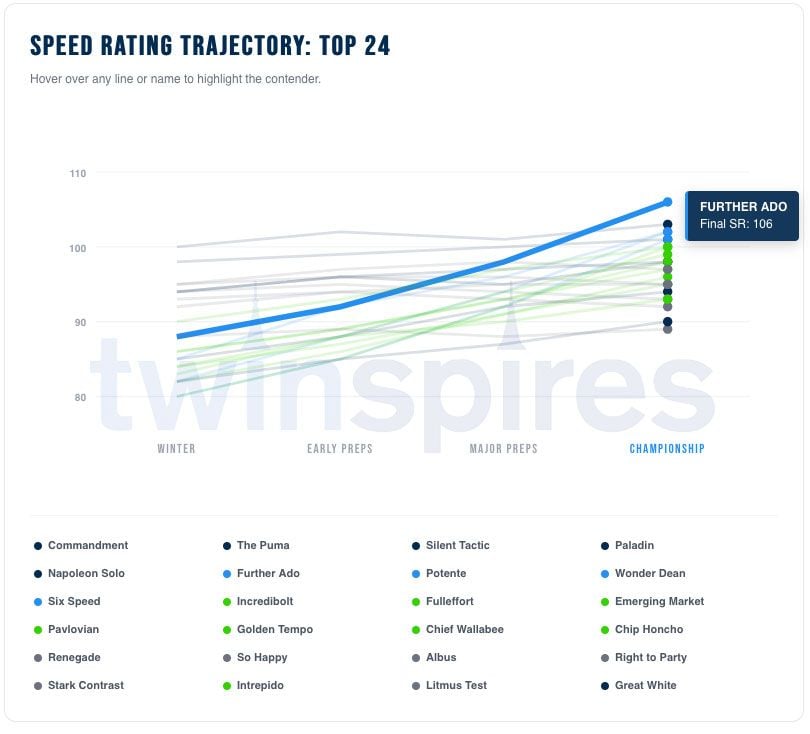
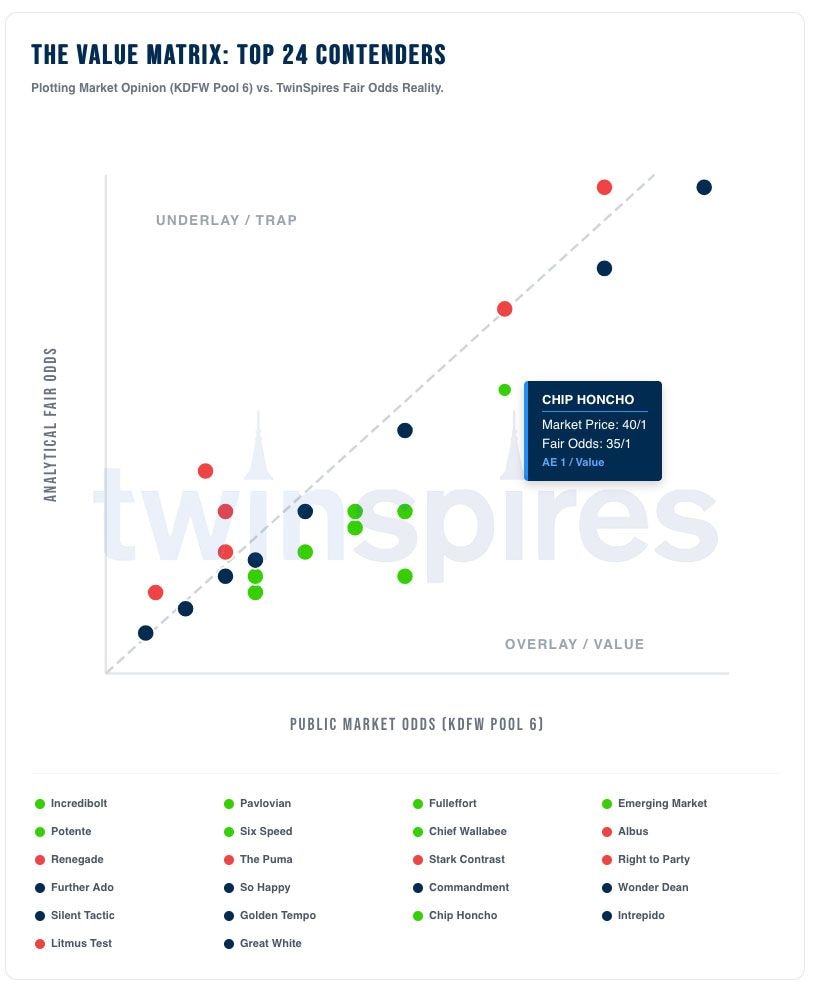
Gemini’s main decision factors were succinct in a 5-point process. The agent examined Market Opinion versus Reality, then dove deeper into a detailed examination of public opinion. Followed by mapping BRISnet Speed Rating trajectory over time and then laying Speed Ratings over Road to the Kentucky Derby Leaderboard Points standings. This was a play for rating talent in prep race performance and past race performance.
Gemini wanted to first really dive into the Kentucky Derby Future Wager pools and see where money went and leverage public sentiment through the Derby Fair Odds to gain a sense of public valuation on the runners.
Following the details, the agent labeled ‘hype’ level for each horse, Speed Ratings, and followed with more interest in form performance data. Plotting a timeline of available speed ratings shows the progression, or recession, of a horse and identifies one-off flukes versus trending changes in fitness form.
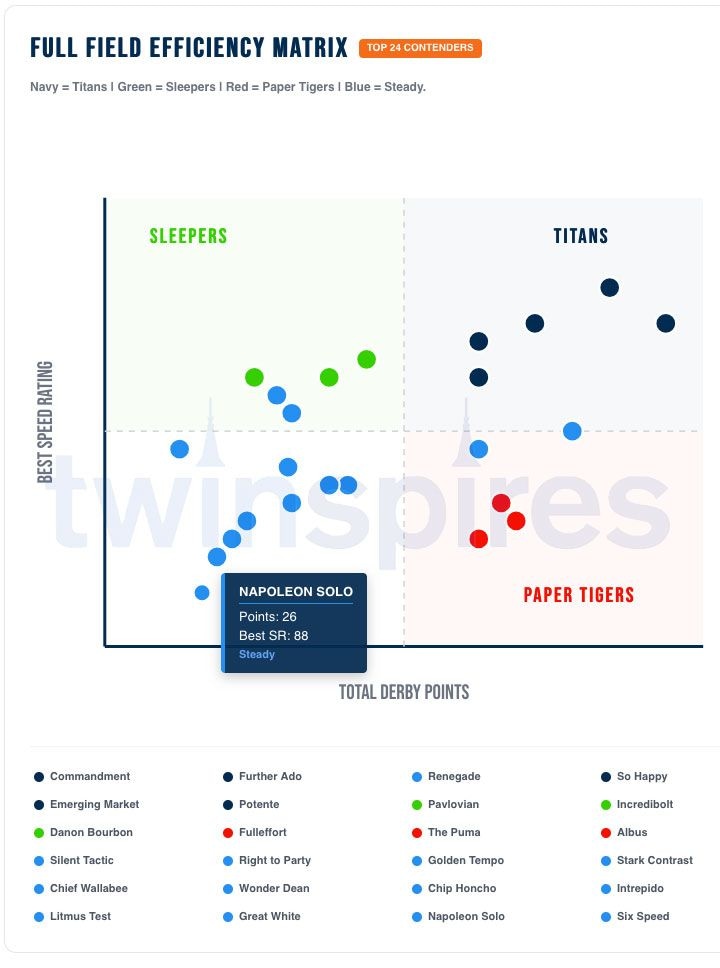
The third solid approach was to create a matrix that shows point earnings from race finishes, as a performance indicator, combined with the best-known lifetime speed rating for each Derby hopeful. This is the graph where Gemini suddenly chose to become obsessed with the notion of a ‘Paper Tiger.’
Paper Tiger: “…a person or thing that appears threatening but is ineffectual.” – Oxford Dictionary
Who is Claude AI suggesting you bet for the Kentucky Derby?
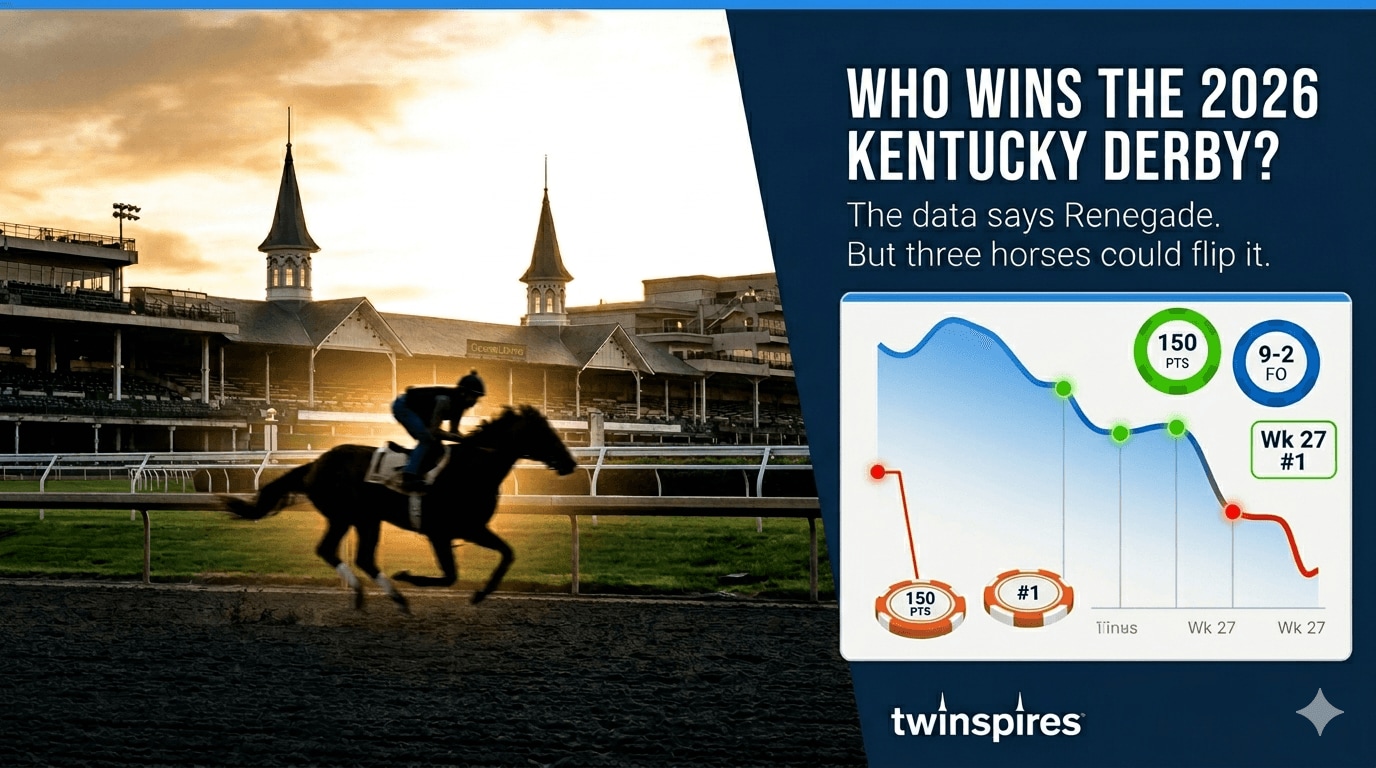
Claude's interpretation of it's article (Courtesy of Claude's Prompt for Genartive Gemini)
Further Ado is the play according Claude, making both AI agents sifting through the provided data to land on the same winner. Claude suggests value plays utilizing Silent Tactic and So Happy, different from Gemini highly touting Incredibolt, Danon Bourbon, Potente, and Napoleon Solo.
- WIN ($20):
- Further Ado
- EXACTA Key on top ($15 or $5 x 3 horses):
- Further Ado over Renegade, Commandment, So Happy
- EXACTA Box ($10 or $5 x 2 horses):
- Renegade, Commandment
- WIN Value ($20):
- Silent Tactic
- TRIFECTA Key ($30 or $5 x 6 horses):
- Further Ado on top over Renegade, Commandment, So Happy over Renegade, Commandment, So Happy
- $5 held as contingency (or post-position observations in Adam's mind)
Note that the logic for each bet can be read in the full handicapping synopsis by Claude and I here.
How did Claude handicap the Kentucky Derby?
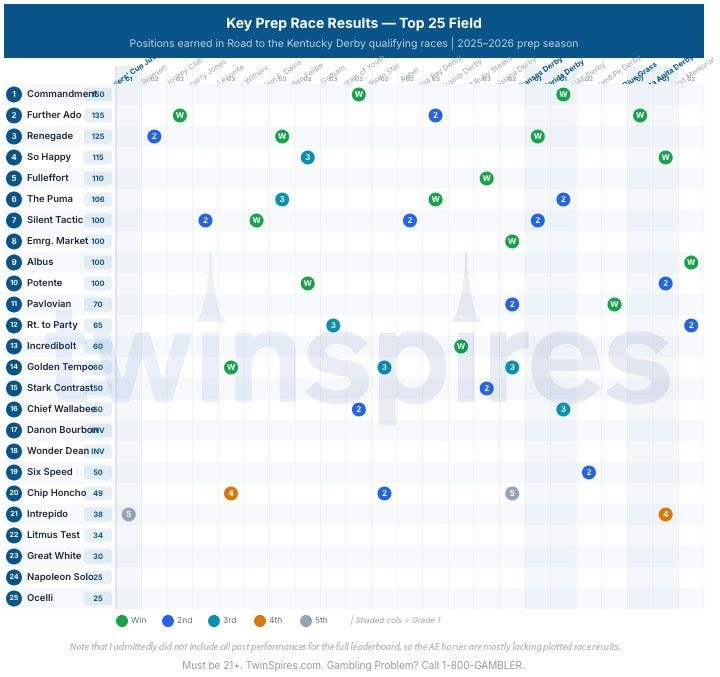
Claude’s handicapping was a methodical, progressive buildup to a final analysis. Thorough examination of horse performance information and detailed vetting of how the public sentiment stacked up against the factual data.
One interesting quirk for Claude was a specific examination of Market Value movement by Kentucky Derby Future Wager details, but with POOL 5 data, electing not to use Pool 6 morning line odds or closing mutuel odds in this specific comparison dive.
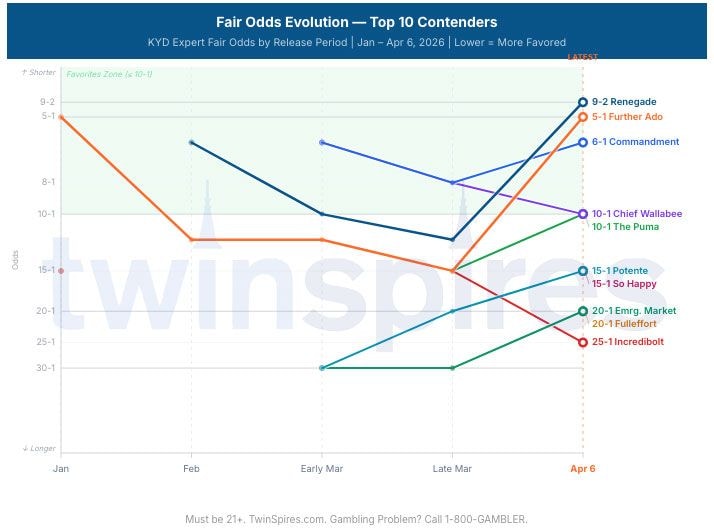
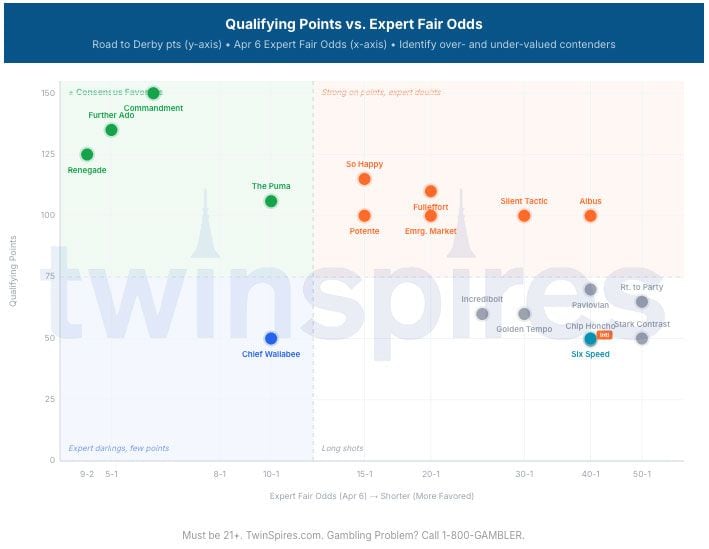
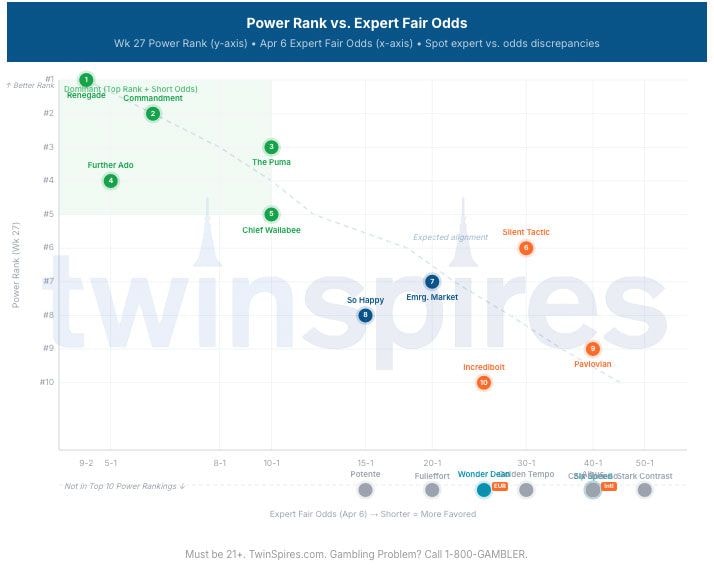
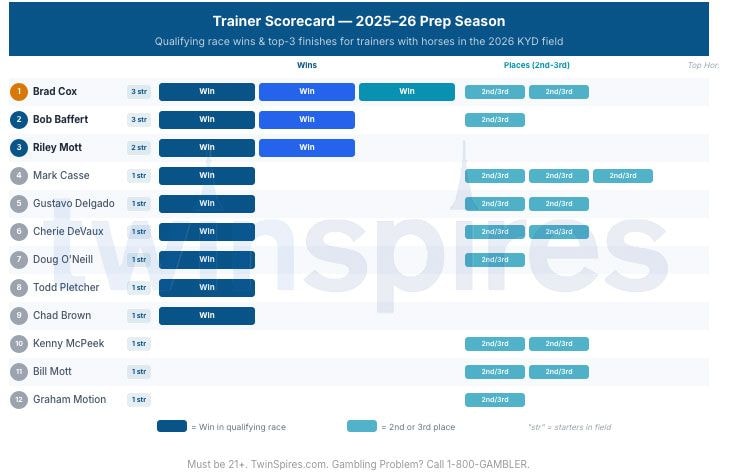
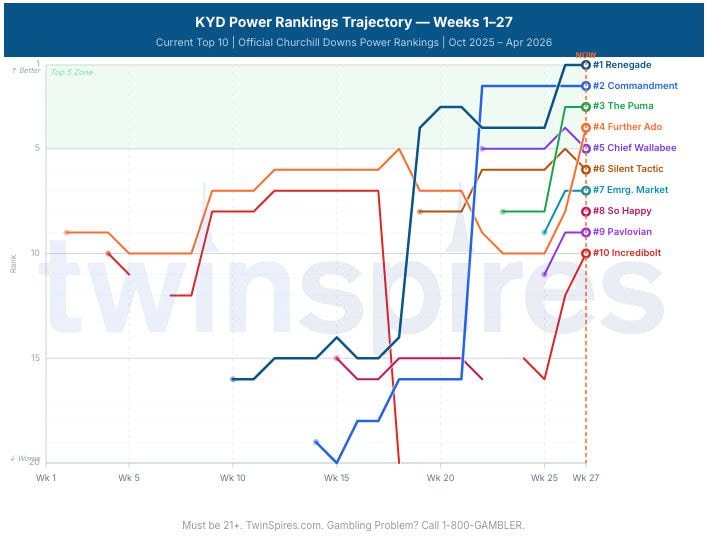
Aside from individual timelines that demonstrate trends over time for most of the measured metrics, the LLM chose to compare Fair Odds, Future Wager Market Consensus (KDFW), Leaderboard Qualifying points as talent signals, and to include Trainer impact, which Gemini did not. The trainer angle really stood out to me as a separator in this project and thought process.
AI Betting Conclusion:
Both agentic tools chose to leverage the ‘firm data’ to anchor their comparisons and analysis. These firm data points consisted of: the Kentucky Derby Future Wager closing odds that show real money activity or public sentiment, the points earned by race performance on the leaderboard, which could indicate how each horse stacks up against one another, and Speed Ratings for form as a proven data point for relation to speed and ability.
Clearly, the agents valued demonstrating experience and trends over time, and sprinkled in some weight to opinion considerations, adorned with Power Rankings and Fair Odds. These seemed to sway AI value play selections.
A strong differentiating point by Claude was the emphasis on Brad Cox and how much the Derby should really be his to lose. Interestingly, Fulleffort, who is trained by Cox, was not a horse in any arrangement of exotic bet tickets. Gemini also didn’t include Fulleffort, but also wasn’t touting a trainer angle such as Brad Cox.
About the AI handicapping process towards the Kentucky Derby
Gemini was a bit more hair-pulling as the agentic LLM really wanted to alter and adjust the process in what we call ‘scope creep’ or overextending beyond the stated focus and goal of our project. I spent too much time fixing issues that were not requested.
However, I found Gemini pleasantly easier to save and pause, providing sanity in picking up future session progress. Gemini was smarter regarding adaptive learning, eventually adapting autonomously to enhance our work by applying TwinSpires article links ingested into the AI prompts via .csv-formatted files, passively with the data.
By far, the coolest part of the project for me was working with AI LLMs to produce the visual representations of their data output or prompt answers. I’m a visual learner, so being able to really dissect trends over time by graphs proved instrumental in grasping the LLM logic flow. Gemini created on-hover functionality to further enhance the utility of the graphs, which creates an engaging way to learn about the Kentucky Derby hopefuls.
I wanted to simply learn how AI would understand and use a specific set of data to complete a handicapping process ahead of the Kentucky Derby draw. And compare the results to other AI agents or Large Language Models (LLMs).
Completing this handicapping process has been a challenge over the past few years, and my team has tested various use cases to leverage AI for research, handicapping, and winner-prediction modeling. For example, three years ago, AI threw a fuss and claimed its existence wasn’t fit for purpose in predicting the future for a bet.
Last year AI handicapping saw a healthy amount of progress in betting flexibility, and for 2026, the agentic tools seem quite comfortable with you leading the way to handicapping and picks. So, the approach to working with the AI LLMs was to set a net of specific data points that encompassed both factual approaches the AI could lean on, while contrasting expert analyst insights, combined with a horse’s past performance and related measurements.
The decision to ensure the data I ingested into the agents was publicly available so that you at home could also play along or test for yourself!

Unsure where to start with TwinSpires and AI?
Log into your TwinSpires account and look for the PaddockPro AI icon to begin asking our AI what horses look interesting that are running today!
The Kentucky Derby Futures Wager Review
What has the public thought over the course of the Road to the Kentucky Derby prep season with Pool 1 through Pool 6? Examine how closing odds for horses may reveal how sharp money could move come Kentucky Derby week. We'll know more when advanced wagering opens Kentucky Derby week.
Reviewing Power Ranking Appearances to Future Wager trajectory
A horse by horse look through 'horse cards' approach for a quick glance at these data points and handicapping insights.