The Most Predictive Horse Racing Metrics: What Actually Moves the Odds
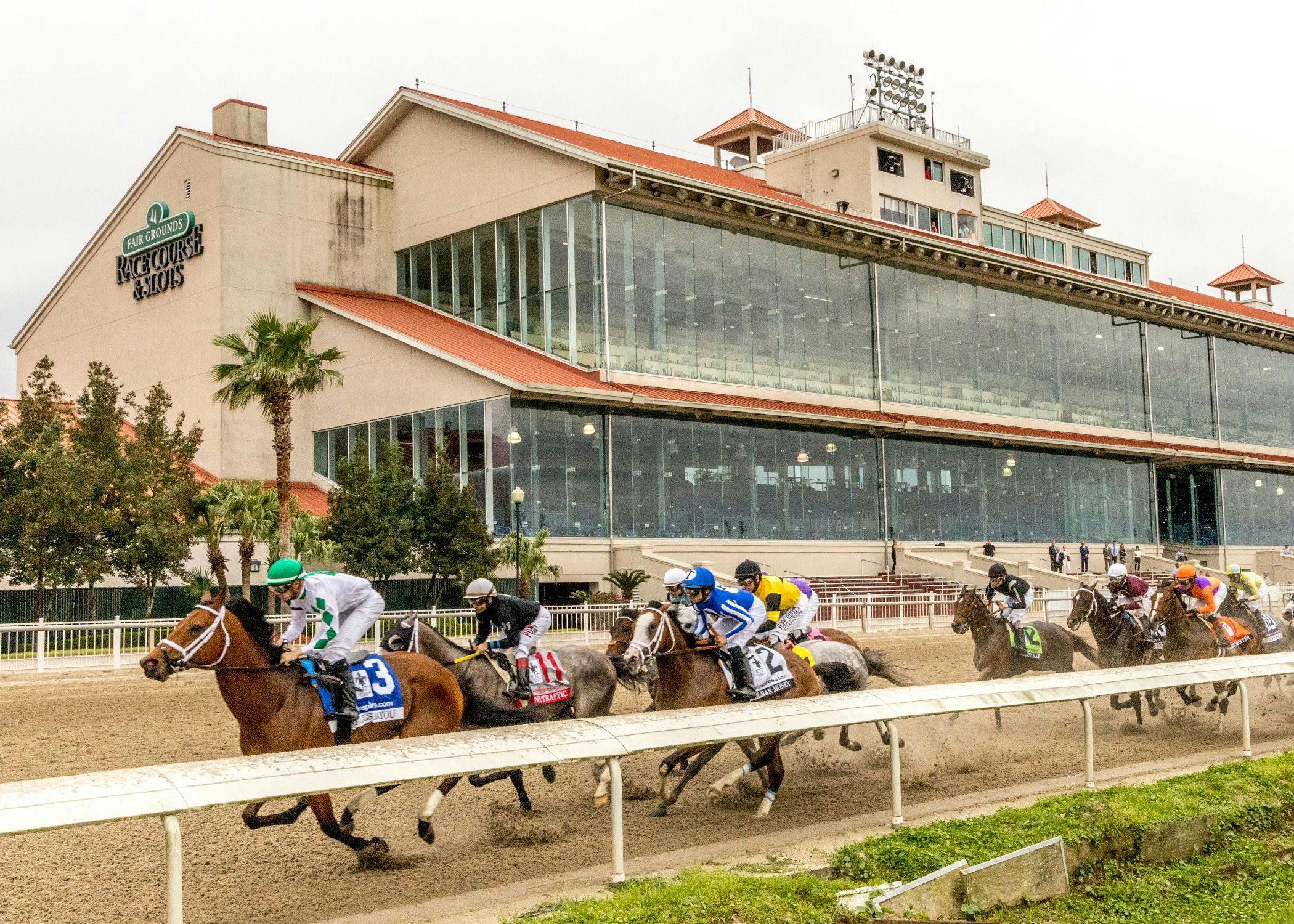
Racing at Fair Grounds. (Photo by Hodges Photography/Amanda Hodges Weir)

February 27th, 2026
Many factors influence the odds in horse racing and determine which horses start as betting favorites.
Intuitively, we know hot jockeys, hot trainers, and strong speed figures are some of the major handicapping angles that attract betting support. Many would say they’re the most predictive metrics in horse racing. But what does the data say? Can we measure the power of these angles more concretely?
It’s difficult to gauge the precise influence of any specific angle since multiple angles often overlap. Fast horses attract hot jockeys, and trainers are hot when they have fast horses. Compelling combinations likely influence odds more than any single angle.
Nevertheless, we’ll give it a shot. In a preliminary study, we’ve analyzed the betting in 60 races across seven race days at Fair Grounds from Jan. 29 through Feb. 7. The races were of the bread-and-butter variety: no stakes races, relatively few first-time starters, and multiple experienced horses in every race.
Across these 60 races, we searched for commonalities among the 60 betting favorites. How many were ridden by hot jockeys? How many owned the highest speed figure in the field? And were some angles more common among betting favorites than others?
Here are the trends our analysis uncovered:
Do hot jockeys move the odds?
The 60 races featured 446 starters. Among these, 98 (22%) were ridden by jockeys with win rates of 20% or higher across 2025-26. Many races featured two or more horses matching this metric, making it impossible for all 98 horses to start as favorites.
While horses are the most important factor in handicapping any race, many bettors look toward jockey statistics to strengthen their opinions and separate top contenders.@J_Keelerman helps you understand rider stats 👇 https://t.co/asGyQ1e0YO
— TwinSpires Racing 🏇 (@TwinSpires) October 20, 2021
Even still, 31 out of 60 favorites (52%) were ridden by jockeys with win rates of 20% or higher.
In contrast, 348 out of 446 starters (78%) were ridden by jockeys with win rates of 19% or less, and this large group produced only 48% of favorites.
Horses ridden by jockeys with win rates of 20% or higher produced a much larger share of favorites than would be expected from a random sampling, suggesting hot jockeys move the odds.
Do hot trainers move the odds?
Trainers with win rates of 20% or higher across 2025-26 were less common than similarly successful jockeys across the 60 races, saddling only 84 of 446 starters (19%). Not every race featured a trainer with a 20%+ win rate, yet these trainers still managed to saddle 24 out of 60 favorites (40%).
The converse is thus obvious: trainers with win rates of 19% or less saddled 362 out of 446 starters (81%), but only 36 out of 60 favorites (60%). On a related note, only two favorites (3%) were conditioned by trainers with win rates below 10%.
Clearly, hot trainers move the odds, but perhaps not quite to the same extent as hot jockeys.
Do strong recent speed figures move the odds?
Among the 446 starters, 69 were experienced horses owning the highest or co-highest last-out Brisnet Speed rating in their field. Despite representing only 15% of starters, this group produced 47% of favorites—28 out of 60.
In stark contrast, 66 experienced horses owned the lowest or co-lowest last-out Brisnet Speed rating in their field. They represented 15% of all starters, but produced only two out of 60 favorites (3%).
Of the 446 starters, 22 (5%) were unraced and lacked any Brisnet Speed ratings. This group produced one out of 60 favorites (2%), but given that the first-time starters appeared in only a small subset of races (and often competed against each other), the low percentage of unraced horses among the 60 betting favorites is to be expected.
The 292 experienced runners with neither the highest nor the lowest last-out Brisnet Speed rating represented 65% of all starters and yielded 29 out of 60 favorites (48%).
The main takeaway? Horses with the highest last-out Brisnet Speed rating produced over three times as many favorites as would be expected if all else were equal and Brisnet Speed ratings had no influence on the odds.
Do strong lifetime speed figures move the odds?
From 446 starters, 65 (15%) owned the highest or co-highest lifetime Brisnet Speed rating in their field. This group produced 24 out of 60 favorites (40%)
On the opposite end of the spectrum, 66 starters (15%) owned the lowest or co-lowest Brisnet Speed rating in their field. This group yielded only one out of 60 favorites (2%).
As outlined previously, 22 horses (5%) were first-time starters, and this group produced one out of 60 favorites (2%).
The remaining 293 experienced starters with neither the highest nor the lowest lifetime Brisnet Speed rating represented 66% of all starters and produced 34 out of 60 betting favorites (57%).
In short, horses with the highest career Brisnet Speed rating are popular among bettors, but they don’t move the odds to quite the same extent as horses with the highest last-out Brisnet Speed rating.
Conclusions
Seven days of racing at Fair Grounds confirm our expectations: hot jockeys, hot trainers, and strong speed figures move the odds and increase the likelihood of a horse starting as the betting favorite. If you see a horse boasting all three of these positives, you may be looking at a short-priced favorite.
ADVERTISEMENT