Yes, She Did: Cherie DeVaux Becomes the First, But Not the Last

Updated:
Saturday, May 2, 2026, dawned chillier than one might anticipate for a day in early May in the Bluegrass. As they migrated by car, by rideshare, and some even by plane, toward the Twin Spires, racegoers showed their concessions to the weather, with coats, jackets, and wraps added to the incandescent spectrum of colors. Dressed to the nines with another layer hastily assembled, the crowd of 150,000 descended on Churchill Downs as clouds and sun alternated over the hours of what tends to be a long day at the races.
But at day’s end, the gray gave way to red roses and big smiles as jockey Jose Ortiz took Golden Tempo from last to first to win the 152nd Kentucky Derby. Every Derby is historic, every Derby features stories that leave impressions long after the race is run, but this one, this one means a little bit more.
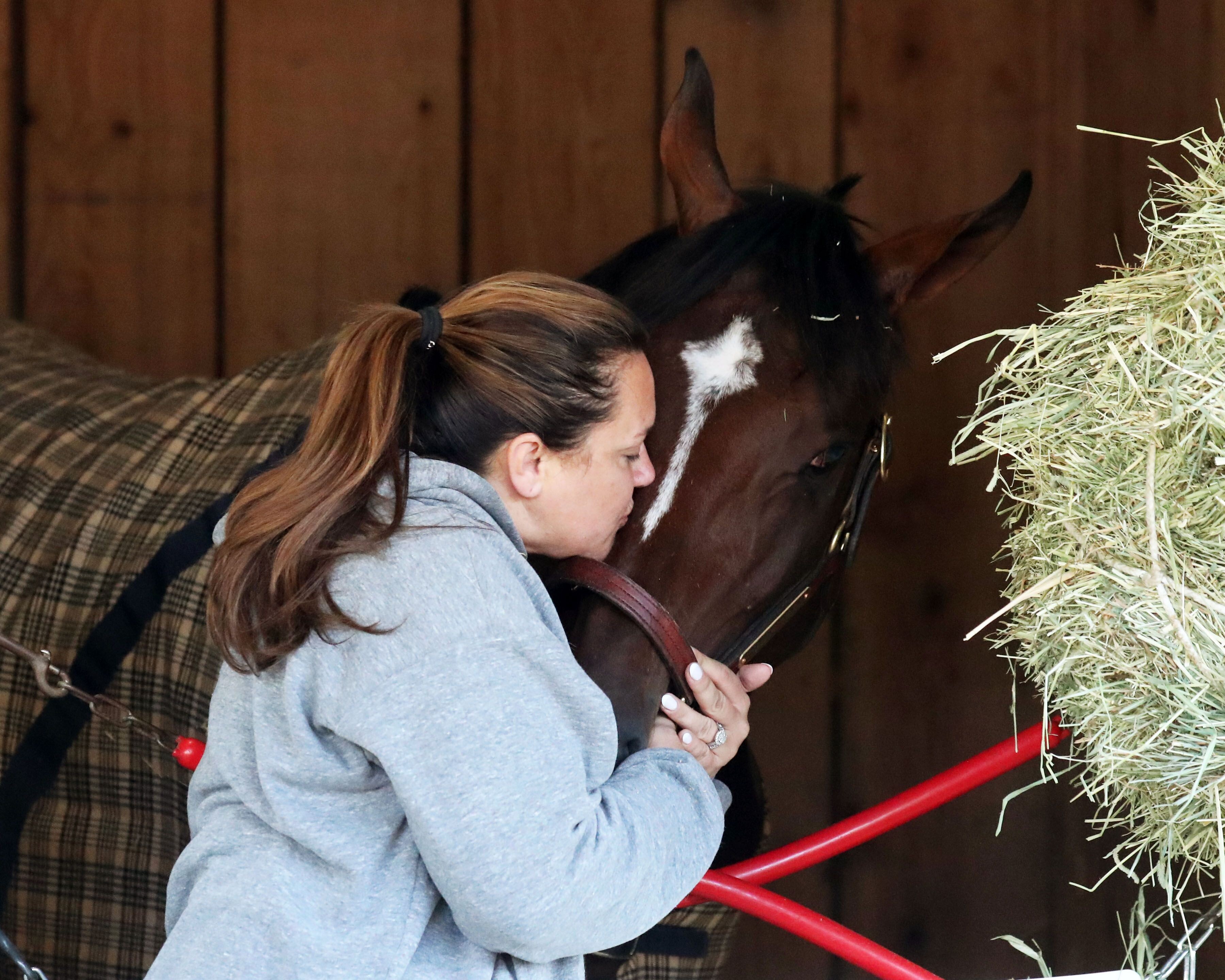
Cherie DeVaux, her life devoted to horses from her earliest days, became the first woman to train a Kentucky Derby winner. Her victory is a reminder of something simple: that all any of us needs is a chance, and we can do great things.
Building the Foundation
Women have always been a part of the Kentucky Derby. At that first running, when women were on hand to enjoy a day at the races, though in their own special sections of the grandstand, spaces reserved for ‘fairer sex,’ away from the debauchery of drinking and gambling. No doubt, they were wagering too, though they would have had to rely on their male companions to place those bets since they were not allowed to.
At least one of the great traditions associated with the Derby happened because of women. New York socialite E. Berry Wall gave roses to all of the ladies attending a party after the 1883 running of the Kentucky Derby, which created enough of a thrill that Colonel Meriwether Lewis Clark made the red rose the official flower of the 1884 edition. To this day, the rose remains the centerpiece of Derby Day, from dresses to decorations.
Women have always been a part of the Kentucky Derby, and in 1904, they went from spectators to participants twice over. Elwood, a colt bred in Missouri by Faustiana Farm’s Emma Holt Prather, came to Louisville in the colors of Lasca Durnell, whose husband, Charles Elwood "Boots" Durnell, trained the Derby winner. A cavalcade of women owners followed, starting with Rosa Hoots and Black Gold in 1924 through Lucille Wright Markey, Penny Chenery, and Frances L. “Fannie” Kesner Hertz.
About the same time, Mary Hirsch, daughter of Hall of Fame trainer Max Hirsch, became the first woman to train a Kentucky Derby contender, bringing No Sir to the 1937 Kentucky Derby, where War Admiral took home the prize, but Hirsch sealed her place in the sport with her one and only starter, the precursor to the changes that were to come in later decades.
Making It So
The social changes of the 1960s and 1970s saw women’s roles in the sport expand. Diane Crump became the first woman to ride in the Derby in 1970, finishing 15th behind Dust Commander. Maryjean Wall broke through as a turf writer for the Lexington Herald-Leader, becoming one of the first women in the press box and the first woman admitted into what would become the National Turf Writers and Broadcasters.
Over the next decades, women became a more frequent presence in the press box, the backside, the breeding shed, and other places within the sport. Five more women rode in the Derby, with Rosie Napravnik coming closest to a win with her fifth-place finish on Mylute in 2013. More women walked over with starters, Shelley Riley’s Casual Lies only a length back of the winning Lil E. Tee in 1992.
The whole time, these women were doing the work much as their male counterparts were. They cared for horses. They put in the hours, built the skills, and understood what it meant when they succeeded. At the heart of it all was something simple: they just wanted to do the job. They were trainers, jockeys, owners, breeders, grooms, hot walkers, and more, who just happened to be women.
These pioneers were the ones who saw the challenges and found a way around them.
Sylvia Bishop, the first African American woman licensed as a trainer, was familiar with the challenges and said of her time at the helm of her own stable, “I was tough, but you had to be if you wanted to succeed.”
Jena Antonucci became the first woman to train the winner of a Triple Crown race when Arcangelo took the 2023 Belmont (G1). After that victory, Antonucci said, “When we were walking out, I said, ‘There is not a table made for you, you make the table. You put great people around you. You work hard. Work your tail off. It will come if you do it the right way. Do it the right way.’”
“You fight for that spot, and you feel you have to prove your worth. Horses don’t care. They don’t care who you are. They know who you are.”
The effect of their pioneering careers and historic victories resonates throughout the years that follow, affecting the lives of countless young women who saw what their hard work and faith in themselves brought.
Julie Krone’s trip on Colonial Affair in the 1993 Belmont Stakes earned her the title of the lone woman to ride the winner of a Triple Crown race. Twenty-five years later, Krone shared that “girls still come up to me and say, ‘You inspired me so much. You let me know a girl could do it.’”
And now, we can add Cherie DeVaux’s name to that list. She was the one who understood what made Golden Tempo tick, what he needed to take the next step, and what strategy would work best for his running style. She took decades of experience in the saddle and on the shedrow, skills instilled in her by her parents, who both work with Standardbreds, and the family they built. At every turn, people showed faith in her and her ability and gave her opportunities to prove what she could do, and helped her realize the ambitions she had for herself.
More than a century after Lasca and Emma, nearly 90 years after Mary, and more than 50 after Diane, Cherie thrilled us with Golden Tempo. She hoisted the trophy. She earned the title of the first.
And if history has shown us anything, she will not be the last.
Congratulations, Cherie DeVaux and your team, on Golden Tempo’s victory.