Tall Tales of the Track – Mother of Greatness, Twice Over
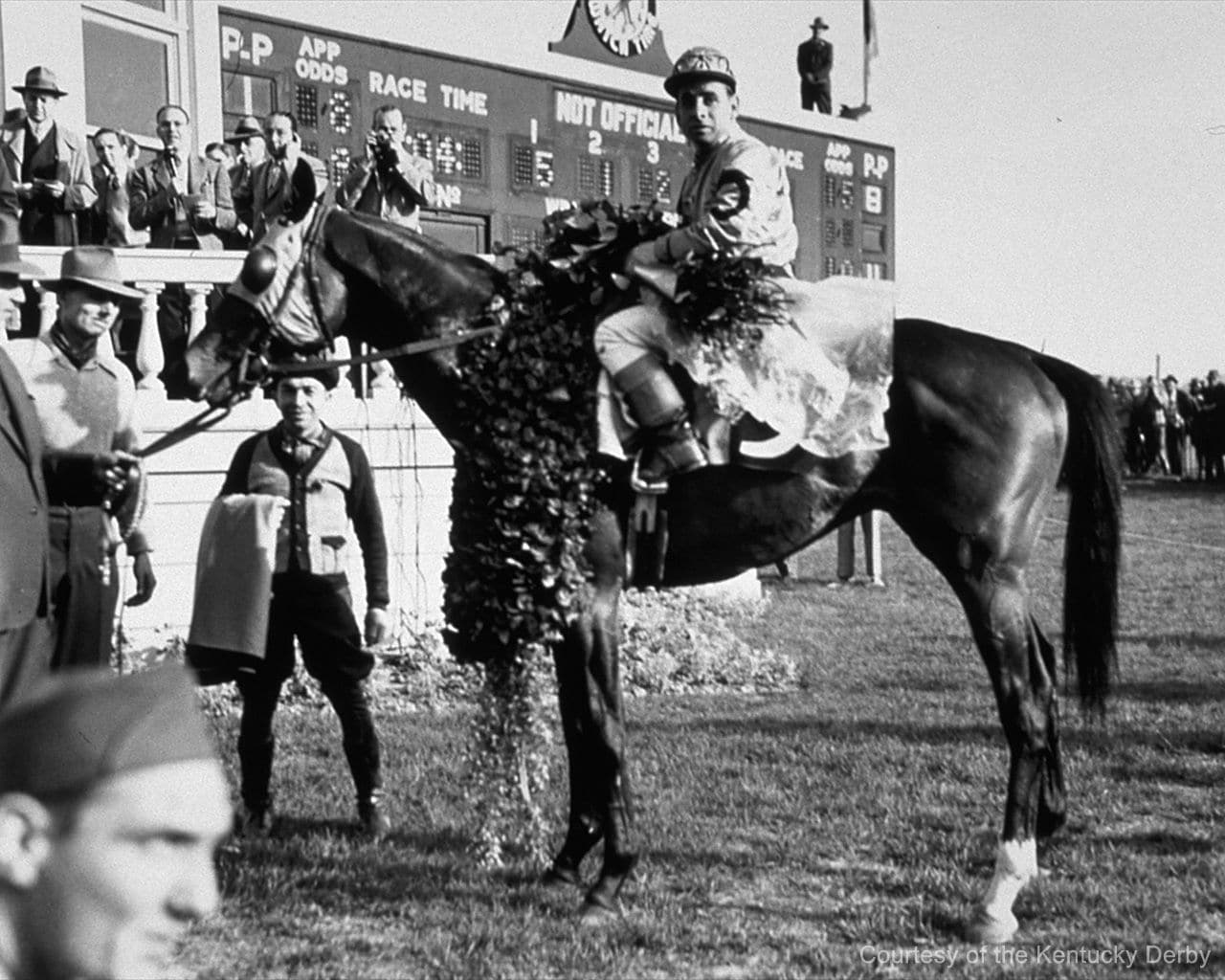
Count Fleet wins the 1943 Kentucky Derby (Courtesy of the Kentucky Derby/Churchill Downs)

Updated:
Being a mother of a champion does not require the mare herself to also be one. Stage Magic won three of her 12 starts before producing Justify. Littleprincessemma raced twice, finishing out of the money both times, and then gave us American Pharoah. Somethingroyal raced only once before retiring to broodmare life, and then producing stakes winner Sir Gaylord and the immortal Secretariat.
And then racing history gives us Quickly, a hard-knocking sprinter who went from claimer to matriarch, producing not one, but two Hall of Famers in Count Fleet and Depth Charge.
Mother of Champions
Joseph E. Widener’s Haste had been most successful at shorter distances, though he did finish third in the 1926 Belmont Stakes. Widener then paired the stallion with his mare Stephanie, whose grandsire was the speedy The Tetrarch, and produced a black filly named Quickly. She raced in allowance and claiming races, 82 in all over six seasons, amassing $21,530 in Depression-era earnings. Upon retirement, she joined the broodmare band at John and Fannie Hertz’s Stoner Creek Stud near Paris, Ky.
The Hertzes were looking for a sprinter mare to pair with their stallion Reigh Count, who had won the 1928 Kentucky Derby and was a distance specialist, winning the 14-furlong Saratoga Cup, the 13-furlong Lawrence Realization, and the 16-furlong Jockey Club Gold Cup, and then was second in the 1929 Ascot Gold Cup, a 2 1/2 mile feature at Royal Ascot. If they could merge Quickly’s speed with Reigh Count’s stamina, they could create a racehorse with the perfect balance of both. Their first foal, a 1938 filly named Reigh Grey, raced seven times but did not win. Quickly did not have a foal in 1939, and in 1940, she produced a brown colt marked with a diamond of white on his forehead and a hind sock, whom the Hertzes would name Count Fleet.
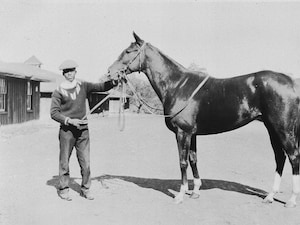
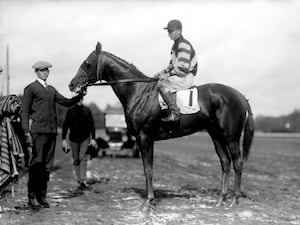
Quickly’s son was a bit of a wild child, rambunctious to the point that Hertz worried that the colt might hurt contract rider Johnny Longden. Nevertheless, he was a superstar, matching Pimlico’s track record for 1 1/16 miles when he won the Pimlico Futurity and then setting a track record for a mile in the Champagne Stakes at Belmont Park. Then, at three, he won the Wood Memorial, the Kentucky Derby, the Preakness Stakes, and the Belmont Stakes, making him the sixth Triple Crown winner. His rambunctiousness got the better of him in the final race, which he won by 25 lengths: Count Fleet injured himself during that test and never recovered enough to return to the racetrack.
His record, though, was enough to earn him not only the Triple Crown but also a spot in the National Museum of Racing and Hall of Fame, including a perfect three-year-old season that included a win in the Withers Stakes between the Preakness and Belmont. His success made Quickly a valuable producer, and she would go on to produce another notable Thoroughbred, one whose success came in a different kind of racing.
Champions Galore
When the Hertzes chose Bold Venture for Quickly’s next mating after foaling Count Fleet, they did not know how successful the nick with Reigh Count would be. In fact, John Hertz tried to sell Quickly, Count Fleet, and her weanling by Bold Venture, 1932 Kentucky Derby and Preakness winner, to Robert Kleberg of King Ranch, but the Texas breeder and owner did not want the whole package. Quickly was a cribber, meaning that she would bite a solid surface with her front teeth and pull back, contracting the neck muscles and producing a grunting sound, a bad habit that turned Kleberg off. He was not interested in the yearling that would become Count Fleet either, but he did like the look of Quickly’s Bold Venture weanling, especially since the stallion was standing at his King Ranch after his purchase in December 1939.
That plain brown weanling became Depth Charge, who raced 16 times, winning five and earning $5,943. His best stakes showing was a third in the Myles Standish Stakes at Suffolk Downs in Boston, so this half-brother to Count Fleet was not quite as talented on the track, but in the breeding shed, it was a different story. Retired to stud at Kleberg’s King Ranch in Texas, he stood alongside his sire, Bold Venture, and authored a genetic legacy in both Thoroughbred and Quarter-Horse circles.
Depth Charge did sire 174 Thoroughbreds, including Dark Charger, winner of the Adirondack and Schuylerville Stakes; Reactor, who (rather appropriately) won the Bold Venture Handicap; and Free Stride, winner of the El Encino, Governor's, and Renton Handicaps. But his greatest impact came as the sire of Quarter Horses. Depth Charge sired 220 foals, including stars such as Johnny Dial, Super Charge, Dividend, and Tiny Charger. Johnny Dial was the American Quarter Horse Association’s World Champion in 1952 on the merits of his victory in the Ruidoso Stallion Stakes and a placing in the California Championship.
Super Charge made 43 starts and won 12 races, including the 1953 Southwestern Futurity and Baby Stakes. He also equaled the World Record for 250 yards in 13.4 seconds and was named the 1953 AQHA Racing Champion Two-Year-Old Colt. Dividend accumulated a record of 45-11-11-4 with $30,435 in purses; he also became a good stallion. Tiny Charger was another son who went on to fame on the track and off: as a two- and three-year-old, he earned $73,356 from wins in stakes like the Inaugural at Bay Meadows and the Inaugural at Los Alamitos.
Depth Charge’s influence on the Quarter Horse earned him a spot in the American Quarter Horse Hall of Fame in 1991, meaning that Quickly, that daughter of Haste who never won a stakes, produced not just a Triple Crown winner and Hall of Famer, but also a stallion who had an impact on another breed of racehorse, one that valued the speed she was known for.
ADVERTISEMENT